Summary

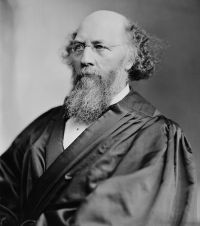
Portrait of Stephen Johnson Field Stephen Johnson Field Coleman v. Tennessee — Opinion of the Court

If an army marching through a friendly country would thus be exempt from its civil and criminal jurisdiction, a fortiori would an army invading an enemy's country be exempt. The fact that war is waged between two countries negatives the possibility of jurisdiction being exercised by the tribunals of the one country over persons engaged in the military service of the other for offences committed while in such service.
Source: Wikisource

Portrait of Stephen Johnson Field Stephen Johnson Field Coleman v. Tennessee — Opinion of the Court

The laws of the State for the punishment of crime were continued in force only for the protection and benefit of its own people. As respects them, the same acts which constituted offences before the military occupation constituted offences afterwards; and the same tribunals, unless superseded by order of the military commanders, continued to exercise their ordinary jurisdiction.
If these views be correct, the plea of the defendant of a former conviction for the same offence by a court-martial under the laws of the United States was not a proper plea in the case.
Source: Wikisource

Portrait of Stephen Johnson Field Stephen Johnson Field Coleman v. Tennessee — Opinion of the Court

As Congress is expressly authorized by the Constitution 'to raise and support armies,' and 'to make rules for the government and regulation of the land and naval forces,' its control over the whole subject of the formation, organization, and government of the national armies, including therein the punishment of offences committed by persons in the military service, would seem to be plenary. All we now affirm is, that by the law to which we are referred, the thirtieth section of the Enrolment Act, no such exclusive jurisdiction is vested in the military tribunals mentioned.
Source: Wikisource

Get perspective with Kwize: daily news enlightened by great literature