Summary

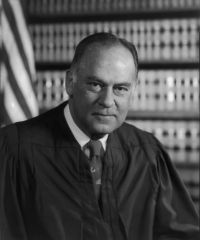
Portrait of Potter Stewart Potter Stewart United States v. Weller — Opinion of the Court

Testing the appellee's motion to dismiss by this standard, we think it plain that it cannot qualify as a 'motion in bar.' The appellee did not deny that he refused to submit to induction, but he claimed that his conduct was not a crime because of the prior denial of counsel. He has not confessed to a crime and claimed immunity from prosecution; he argues that he has committed no crime.
We conclude, therefore, that we have no jurisdiction over this appeal under either the 'construction of the statute' or 'motion in bar' provisions of the Criminal Appeals Act.
Source: Wikisource

Portrait of Potter Stewart Potter Stewart United States v. Weller — Opinion of the Court

During its debates on the Criminal Appeals Act in 1907, Congress paid relatively little attention to the 'special plea in bar' section of the Act. The clearest statement of its meaning was given by one of the bill's cosponsors, Senator Patterson:
'A special plea in bar is that which is set up as a special defense notwithstanding the defendant may be guilty of the offenses with which he is charged; it is for some outside matter
Source: Wikisource

Portrait of Potter Stewart Potter Stewart United States v. Weller — Opinion of the Court

The relation between the Selective Service Act and the regulation forbidding representation by counsel before local boards is wholly different from the situation in Mersky. The regulation is not at all 'called for by the statute itself,' 361 U.S., at 438, 80 S.Ct., at 463. Indeed, so independent are the statute and the regulation that it would be entirely possible for a regulation covering the same subject matter to provide exactly the reverse of what the present regulation requires.
Source: Wikisource

Get perspective with Kwize: daily news enlightened by great literature