Summary

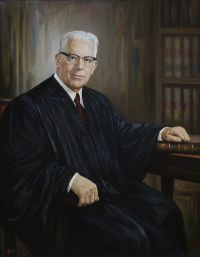
Portrait of Earl Warren Earl Warren Carroll v. United States (354 U.S. 394…

Moreover, in a limited sense, form is substance with respect to ascertaining the existence of appellate jurisdiction. While it is always necessary to categorize a situation realistically, to place a given order according to its real effect, it remains true that the categories themselves were defined by the Congress in terms of form. Many interlocutory decisions of a trial court may be of grave importance to a litigant, yet are not amenable to appeal at the time entered, and some are never satisfactorily reviewable.
Source: Wikisource

Portrait of Earl Warren Earl Warren Carroll v. United States (354 U.S. 394…

The 1901 Code gave the Government 'the same right of appeal that is given to the defendant,' while the 1926 amendment to the Code restricted the defendant's right of appeal to those decisions of the Supreme Court (now District Court) that have a 'final' effect, as that term is understood in defining appellate jurisdiction. We conclude that full force cannot be given to the limitations imposed on criminal appeals in the District of Columbia unless the Government is restricted as is the defendant.
Source: Wikisource

Portrait of Earl Warren Earl Warren Carroll v. United States (354 U.S. 394…

There is a further principle, also supported by the history of federal appellate jurisdiction, that importantly pertains to the present problem. That is the concept that in the federal jurisprudence, at least, [8] appeals by the Government in criminal cases are something unusual, exceptional, not favored. The history shows resistance of the Court to the opening of an appellate route for the Government until it was plainly provided by the Congress, and after that a close restriction of its uses to those authorized by the statute.
Source: Wikisource

Get perspective with Kwize: daily news enlightened by great literature