Summary

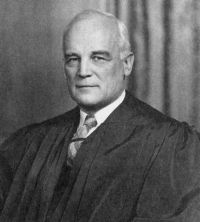
Portrait of Harold Hitz Burton Harold Hitz Burton Sears Roebuck and Company v. Mackey…

Of course, as the Court's opinion appears to recognize, that crucial principle of the doctrine of finality that the court of appeals has no jurisdiction unless there is a 'final decision' cannot be left to the district court. It is one thing for a district court to determine whether it is or is not through with a portion of a litigation. It is quite another thing for it to determine whether the requirements of § 1291 are satisfied so as to give jurisdiction to the court of appeals.
Source: Wikisource

Portrait of Harold Hitz Burton Harold Hitz Burton Sears Roebuck and Company v. Mackey…

What have been called exceptions are not exceptions at all in the sense of inroads on the principle. They have not qualified the core, that is, that there should be no premature, intermediate appeal.
Thus the Court has permitted appeal before completion of the whole litigation when failure to do so would preclude any effective review or would result in irreparable injury.
Source: Wikisource

Portrait of Harold Hitz Burton Harold Hitz Burton Sears Roebuck and Company v. Mackey…

The Court casually disregards this long history of § 1291 and the bearing of Rule 54 (b) to it by rejecting the separate-and-independent test as the basis for determining the finality of a part of a multiple claims litigation. The Court says that its decision 'does not impair the statutory concept of finality embraced in § 1291.' The Court may not do so in words, for it pays lip-service to § 1291. But that section's function as a brake against piecemeal appeals in future multiple claims litigation is greatly impaired. Encouragement is abundantly given to parties to seek such appeals.
Source: Wikisource

Get perspective with Kwize: daily news enlightened by great literature