Summary

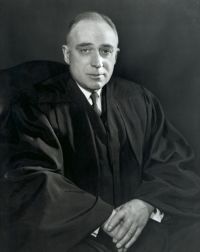
Portrait of John Marshall Harlan II John Marshall Harlan II United States v. Sisson — Opinion of the Court

The statutory phrase 'decision arresting a judgment' is not an empty vessel into which this Court is free to pour a vintage that we think better suits present-day tastes. As we have shown, Congress defined our jurisdiction in the Criminal Appeals Act in terms of procedures existing in 1907. As a matter of interpretation, this Court has no right to give the statutory language a meaning inconsistent with its common-law antecedents, and alien to the limitations that today govern motions in arrest of judgment under Rule 34.
Source: Wikisource

Portrait of John Marshall Harlan II John Marshall Harlan II United States v. Sisson — Opinion of the Court

Clarity is to be desired in any statute, but in matters of jurisdiction it is especially important. Otherwise the courts and the parties must expend great energy, not on the merits of dispute settlement, but on simply deciding whether a court has the power to hear a case. When judged in these terms, the Criminal Appeals Act is a failure. Born of compromise, and reflecting no coherent allocation of appellate responsibility, [63] the Criminal Appeals Act proved a most unruly child that has not improved with age.
Source: Wikisource

Portrait of John Marshall Harlan II John Marshall Harlan II United States v. Sisson — Opinion of the Court

When asked why he had refused induction, Sisson emphasized that he thought the war illegal. He also said that he felt the Vietnam war was 'immoral,' 'illegal,' and 'unjust,' and went against 'my principles and my best sense of what was right.' The court asked Sisson what the basis for his conclusions was, particularly what Sisson meant when he said the war was immoral. Sisson said that the war violated his feelings about (1) respect for human life, (2) value of man's freedom, and (3) the scale of destruction and killing consonant with the stated purposes of American intervention.
Source: Wikisource

Get perspective with Kwize: daily news enlightened by great literature