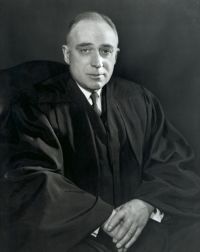
John Marshall Harlan II

John Marshall Harlan II

Summary

Portrait of John Marshall Harlan II John Marshall Harlan II Dickey v. Florida — Concurrence

But an accused may just as easily object to delay for its prolongation of the time in which he must live in uncertainty, carrying the emotional and financial burdens of accusation, and possessing the conditioned freedom of a potential felon. Moreover, the passage of time may threaten the ability of both the defendant and the government to prepare and present a complete case; in this regard, delay does not inherently benefit the accused any more than it does the prosecution.
Source: Wikisource

Portrait of John Marshall Harlan II John Marshall Harlan II Dickey v. Florida — Concurrence

Thus, although we said in Klopfer that the right to a speedy trial is 'one of the most basic rights preserved by our Constitution,' 386 U.S., at 226, 87 S.Ct., at 995, a guarantee 'as fundamental as any of the rights secured by the Sixth Amendment,' id., at 223, 87 S.Ct., at 993, we have yet even to trace its contours. Accordingly, I think it appropriate to point out certain of the major problems that courts must consider in defining the speedy-trial guarantee.
Source: Wikisource

Portrait of John Marshall Harlan II John Marshall Harlan II Dickey v. Florida — Concurrence

Arguments of some force can be made that the guarantee attaches as soon as the government decides to prosecute and has sufficient evidence for arrest or indictment; similar arguments exist that an accused does not lose his right to a speedy trial by silence or inaction, that governmental delay that might reasonably have been avoided is unjustifiable, and that prejudice ceases to be an issue in speedy-trial cases once the delay has been sufficiently long to raise a probability of substantial prejudice.
Source: Wikisource

Get perspective with Kwize: daily news enlightened by great literature