Summary

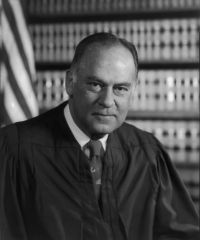
Portrait of Potter Stewart Potter Stewart Russell v. United States (369 U.S. 749…

A cryptic form of indictment in cases of this kind requires the defendant to go to trial with the chief issue undefined. It enables his conviction to rest on one point and the affirmance of the conviction to rest on another. It gives the prosecution free hand on appeal to fill in the gaps of proof by surmise or conjecture. The Court has had occasion before now to condemn just such a practice in a quite different factual setting.
Source: Wikisource

Portrait of Potter Stewart Potter Stewart Russell v. United States (369 U.S. 749…

But a proliferation of doubtful issues which not only burden the judiciary, but, because of uncertainties inherent in their resolution, work a hardship upon both the prosecution and the defense in criminal cases, is hardly a desideratum. And the repeated appearance in prosecutions under a particular criminal statute of the same critical and difficult question, which could be obviated by a simple averment in the indictment, invites inquiry into the purposes and functions which a grand jury indictment is intended to serve.
Source: Wikisource

Portrait of Potter Stewart Potter Stewart Russell v. United States (369 U.S. 749…

A grand jury, in order to make that ultimate determination, must necessarily determine what the question under inquiry was. To allow the prosecutor, or the court, to make a subsequent guess as to what was in the minds of the grand jury at the time they returned the indictment would deprive the defendant of a basic protection which the guaranty of the intervention of a grand jury was designed to secure. For a defendant could then be convicted on the basis of facts not found by, and perhaps not even presented to, the grand jury which indicted him.
Source: Wikisource

Get perspective with Kwize: daily news enlightened by great literature