Summary

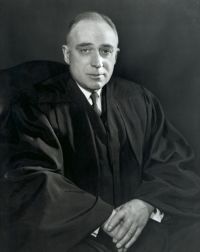
Portrait of John Marshall Harlan II John Marshall Harlan II Spencer v. Texas — Opinion of the Court

Petitioners do not even appear to be arguing that the Constitution is infringed if a jury is told of a defendant's prior crimes. The rules concerning evidence of prior offenses are complex, and vary from jurisdiction to jurisdiction, but they can be summarized broadly. Because such evidence is generally recognized to have potentiality for prejudice, it is usually excluded except when it is particularly probative in showing such things as intent.
Source: Wikisource

Portrait of John Marshall Harlan II John Marshall Harlan II Spencer v. Texas — Opinion of the Court

Nor is it contended that it is unconstitutional for the jury to assess the punishment to be meted out to a defendant in a capital or other criminal case, or to make findings as to whether there was or was not a prior conviction even though enhanced punishment is left to be imposed by the judge. The States have always been given wide leeway in dividing responsibility between judge and jury in criminal cases.
Source: Wikisource

Portrait of John Marshall Harlan II John Marshall Harlan II Spencer v. Texas — Opinion of the Court

It is true that the Court in Jackson supported its holding by reasoning that a general jury verdict was not a 'reliable' vehicle for determining the issue of voluntariness because jurors might have difficulty in separating the issues of voluntariness from that of guilt or innocence. But the emphasis there was on protection of a specific constitutional right, and the Jackson procedure was designed as a specific remedy to ensure that an involuntary confession was not in fact relied upon by the jury.
Source: Wikisource

Get perspective with Kwize: daily news enlightened by great literature