Summary

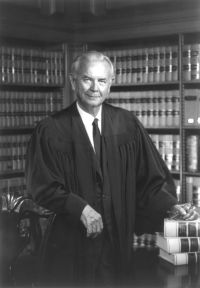
Portrait of William J. Brennan William J. Brennan Ashe v. Swenson — Concurrence

Flexibility in the rules governing the structure of civil litigation is appropriate in order to give the parties the opportunity to shape their own private lawsuits, provided that injustice, harassment, or an undue burden on the courts does not result. Some flexibility in the structuring of criminal litigation is also desirable and consistent with our traditions. But the Double Jeopardy Clause stands as a constitutional barrier against possible tyranny by the overzealous prosecutor.
Source: Wikisource

Portrait of William J. Brennan William J. Brennan Ashe v. Swenson — Concurrence

Abuse of the criminal process is foremost among the feared evils that led to the inclusion of the Double Jeopardy Clause in the Bill of Rights. That evil will be most effectively avoided, and the Clause can thus best serve its worthy ends, if 'same offence' is construed to embody the 'same transaction' standard. Then both federal and state prosecutors will be prohibited from mounting successive prosecutions for offenses growing out of the same criminal episode, at least in the absence of a showing of unavoidable necessity for successive prosecutions in the particular case.
Source: Wikisource

Portrait of William J. Brennan William J. Brennan Ashe v. Swenson — Concurrence

Given the tendency of modern criminal legislation to divide the phrases of a criminal transaction into numerous separate crimes, the opportunities for multiple prosecutions for an esentially unitary criminal episode are frightening. And given our tradition of virtually unreviewable prosecutorial discretion concerning the initiation and scope of a criminal prosecution, [3] the potentialities for abuse inherent in the 'same evidence' test are simply intolerable.
Source: Wikisource

Get perspective with Kwize: daily news enlightened by great literature