Summary

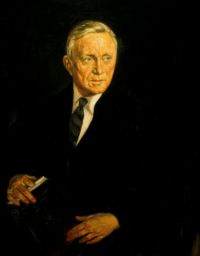
Portrait of William O. Douglas William O. Douglas O'Callahan v. Parker — Opinion of the Court

These cases decide that courts-martial have no jurisdiction to try those who are not members of the Armed Forces, no matter how intimate the connection between their offense and the concerns of military discipline. From these cases, the Government invites us to draw the conclusion that once it is established that the accused is a member of the Armed Forces, lack of relationship between the offense and identifiable military interests is irrelevant to the jurisdiction of a court-martial.
Source: Wikisource

Portrait of William O. Douglas William O. Douglas O'Callahan v. Parker — Opinion of the Court

But from the very nature of things, courts have more independence in passing on the life and liberty of people than do military tribunals.
'Moreover, there is a great difference between trial by jury and trial by selected members of the military forces. It is true that military personnel because of their training and experience may be especially competent to try soldiers for infractions of military rules. Such training is no doubt particularly important where an offense charged against a soldier is purely military, such as disobedience of an order, leaving post, etc.
Source: Wikisource

Portrait of William O. Douglas William O. Douglas O'Callahan v. Parker — Opinion of the Court

This idea is inherent in the institution of trial by jury.'
A court-martial is tried, not by a jury of the defendant's peers which must decide unanimously, but by a panel of officers [2] empowered to act by a two-thirds vote. The presiding officer at a court-martial is not a judge whose objectivity and independence are protected by tenure and undiminishable salary and nurtured by the judicial tradition, but is a military law officer. [3] Substantially different rules of evidence and procedure apply in military trials.
Source: Wikisource

Get perspective with Kwize: daily news enlightened by great literature