Summary

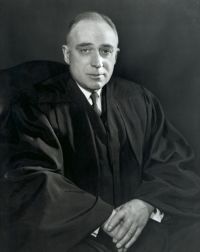
Portrait of John Marshall Harlan II John Marshall Harlan II Banco Nacional de Cuba v. Sabbatino…

This Court would hardly be competent to undertake assessments of varying degrees of friendliness or its absence, and, lacking some definite touchstone for determination, we are constrained to consider any relationship, short of war, with a recognized sovereign power as embracing the privilege of resorting to United States courts. Although the severance of diplomatic relations is an overt act with objective significance in the dealings of sovereign states, we are unwilling to say that it should inevitably result in the withdrawal of the privilege of bringing suit.
Source: Wikisource

Portrait of John Marshall Harlan II John Marshall Harlan II Banco Nacional de Cuba v. Sabbatino…

Whatever considerations are thought to predominate, it is plain that the problems involved are uniquely federal in nature. If federal authority, in this instance this Court, orders the field of judicial competence in this area for the federal courts, and the state courts are left free to formulate their own rules, the purposes behind the doctrine could be as effectively undermined as if there had been no federal pronouncement on the subject.
Source: Wikisource

Portrait of John Marshall Harlan II John Marshall Harlan II Banco Nacional de Cuba v. Sabbatino…

If the act of state doctrine is a principle of decision binding on federal and state courts alike but compelled by neither international law nor the Constitution, its continuing vitality depends on its capacity to reflect the proper distribution of functions between the judicial and political branches of the Government on matters bearing upon foreign affairs.
Source: Wikisource

Get perspective with Kwize: daily news enlightened by great literature