Summary

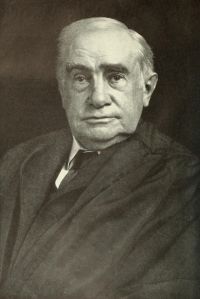
Portrait of Henry Billings Brown Henry Billings Brown Hyde v. Shine — Opinion of the Court

Ownership may not imply a perfect title, but it implies something more than the possession of land under a title which is void; and when the government holds out to owners of lands an inducement to relinquish such lands in exchange for others, it implies that the persons with whom it is dealing, if not the owners in fee simple, are at least bona fide owners, with authority to dispose of and vest a good title thereto. We are clear that the defendant does not fall within this category, and that the United States may justly claim to have been defrauded out of the land patented to him.
Source: Wikisource

Portrait of Henry Billings Brown Henry Billings Brown Hyde v. Shine — Opinion of the Court

Justice Field observed: 'The patents, being issued to fictitious parties, could not transfer the title, and no one could derive any right under a conveyance in the name of the supposed patentees. A patent to a fictitious person is, in legal effect, no more than a declaration that the government thereby conveys the property to no one. There is, in such case, no room for the application of the doctrine that a subsequent bona fide purchaser is protected.
Source: Wikisource

Portrait of Henry Billings Brown Henry Billings Brown Hyde v. Shine — Opinion of the Court

Although the word 'owner' has a variety of meanings, and may, under certain circumstances, include an equitable as well as a legal ownership, or even a right of present use and possession, it implies something more than a bare legal title, and we know of no authority for saying that a person in possession of land under a void deed can be regarded as the owner thereof.
Source: Wikisource

Get perspective with Kwize: daily news enlightened by great literature