Summary

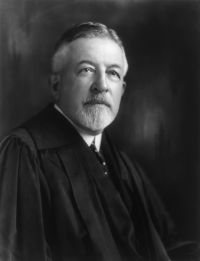
Portrait of Edward Terry Sanford Edward Terry Sanford Wong Tai v. United States — Opinion of the Court

The Opium Act, as amended, provides, in section 2 (c) , being Comp. St. § 8801, that if any person 'receives, conceals, buys, sells, or in any manner facilitates the transportation, concealment, or sale' of any narcotic drug 'after being imported' into the United States, 'knowing the same to have been imported contrary to law,' he shall upon conviction be fined or imprisoned.
Source: Wikisource

Portrait of Edward Terry Sanford Edward Terry Sanford Wong Tai v. United States — Opinion of the Court

United States (C. C. A.) 277 F. 211, 213. In charging such a conspiracy 'certainty, to a common intent, sufficient to identify the offense which the defendants conspired to commit, is all that is' necessary. Williamson v. United States, supra, 447 (28 S.C.t. 171) ; Goldberg v. United States, supra, 213. That this requirement was complied with in the present indictment is clear. In Keck v. United States, 172 U.S. 434, 19 S.C.t. 254, 43 L. Ed. 505, upon which the defendant relies, the indictment was not, as here, for conspiring to commit offenses, but for committing the substantive offenses.
Source: Wikisource

Portrait of Edward Terry Sanford Edward Terry Sanford Wong Tai v. United States — Opinion of the Court

While it is essential to the validity of an indictment under the Federal Constitution and laws that it shall advise the defendant of the nature and cause of the accusation in order that he may meet it and prepare for trial, and after judgment, be able to plead the record and judgment in bar of a further prosecution for the same offense, Bartell v.
Source: Wikisource

Get perspective with Kwize: daily news enlightened by great literature