Summary

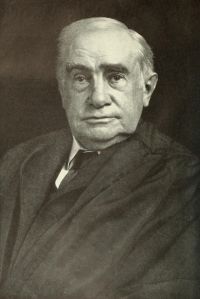
Portrait of Henry Billings Brown Henry Billings Brown Stokes v. United States — Opinion of the Court

Indeed, it is difficult to see, nor do the defendants suggest, what other allegations were necessary to define the offense with greater clearness or certainty, and it is impossible that they could have been misled as to the nature of the charge against them. The rules of criminal pleading do not require the indictment to set forth the evidence, or to negative every possible theory of the defense.
Source: Wikisource

Portrait of Henry Billings Brown Henry Billings Brown Stokes v. United States — Opinion of the Court

We agree with the defendants that three matters of fact must be charged in the indictment and established by the evidence: (1) That the persons charged must have devised a scheme or artifice to defraud; (2) that they must have intended to effect this scheme by opening, or intending to open, correspondence with some other person through the post-office establishment, or by inciting such other person to open communication with them; (3) and that, in carrying out such scheme, such person must have either deposited a letter or packet in the post office, or taken or received one the therefrom.
Source: Wikisource

Portrait of Henry Billings Brown Henry Billings Brown Stokes v. United States — Opinion of the Court

Defendants' argument assumes that these are all the allegations of the agreement constituting the conspiracy, but the indictment continues as follows: 'The scheme and artifice to defraud as aforesaid was to be carried out by each of said defendants representing himself to be engaged as a dealer in various kinds of merchandise and goods, and to have an office, and to use, in correspondence, sheets of paper with his pretended business printed thereon
Source: Wikisource

Get perspective with Kwize: daily news enlightened by great literature