Summary

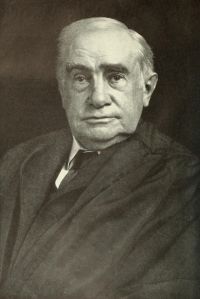
Portrait of Henry Billings Brown Henry Billings Brown Moore v. United States (160 U.S. 268…

It differs from larceny in the fact that the original taking of the property was lawful, or with the consent of the owner, while in larceny the felonious intent must have existed at the time of the taking.
It is objected to the indictment in this case that there is no direct allegation that defendant was an assistant, clerk, or employ e in or connected with the business or operations of the post office at Mobile; that the money of the United States is not identified or described; and that there is no allegation that it came into the possession of the defendant by virtue of his employment.
Source: Wikisource

Portrait of Henry Billings Brown Henry Billings Brown Moore v. United States (160 U.S. 268…

Thus, in the Criminal Code of Illinois, it is declared to be sufficient to allege, generally, in the indictment, an embezzlement, fraudulent conversion, or taking, with intent to embezzle and convert funds of any person, bank, corporation, company, or copartnership, to a certain value or amount, without specifying any particulars of such embezzlement.
Source: Wikisource

Portrait of Henry Billings Brown Henry Billings Brown Moore v. United States (160 U.S. 268…

There are undoubtedly cases which hold that, where the crime consists, not in the embezzlement of a single definite quantity of coin or bills, but in a failure to account for a number of small sums received,-a series of petty and continuous peculations,-where it would be manifestly impossible, probably for the defendant himself, but much more for the prosecution, to tell of what the money embezzled consisted, an allegation of a particular amount is sufficient.
Source: Wikisource

Get perspective with Kwize: daily news enlightened by great literature