“ What does competency in the long run mean? It means, to all reasonable beings, cleanliness of person, decency of dress, courtesy of manners, opportunities for education, the delights of leisure, and the bliss of giving.—Whipple. ”
Competency
Definition and stakes
Competency, broadly defined, refers to the combination of skills, knowledge, and abilities needed to perform a task effectively. Authors such as Sara Agnes Rice Pryor emphasized its personal aspect, portraying it as a self-developed capacity, while Charles Reynolds Brown associated it with social responsibility through education.
John Dewey tied competency to vocational purpose, highlighting its role in democratic participation. Meanwhile, Johann Gottlieb Fichte underscored its dual character—as both active agency and receptive openness. These viewpoints collectively illustrate competency as a dynamic interaction between individual preparedness and societal expectations, linking personal development with collective advancement.
Quotes about “competency”
 Sara Agnes Rice Pryor,
My Day: Reminiscences of a Long Life
Sara Agnes Rice Pryor,
My Day: Reminiscences of a Long Life
“ My practice increases slowly but surely, and is based, I believe, on a conviction of my competency. Thank God what I have accomplished, though small, has been achieved by my own unaided exertions, and without the least obligation to a human being. ”
Sir P. Chalmers Mitchell, Thomas Henry Huxley; A Sketch Of His Life And Work
“ There would always be found men, he declared, who would make the choice between the wealth which may come by successful practice and a modest competency, when that modest competency was to be combined with a scientific career and the means of advancing knowledge. ”
Charles Reynolds Brown, The Cap and Gown (1910)
“ The high office of all mental drill should be to send men out “more heavily and capably responsible” for the general good, and this high quality of competency comes only by strict attention to the law of returns. ”
Charles Robert Newman, Essays in Rationalism
“ They assign the qualifications that constitute competency for a certain function. 2. They decide that there are persons in the community answering to this character. 3. They opine that the view such persons take or would take, imports an assertion of the truth of the idea in question. 4. They accredit that view with being strictly one, supposing that all qualified to arbitrate would acquiesce and agree in the same. 5. They attribute to themselves a similar unanimity. 6. They assume the sufficiency of their own judgment to make all the above conclusions. ”
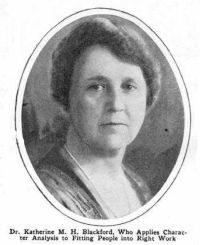 Katherine M. H. Blackford,
Analyzing Character
Katherine M. H. Blackford,
Analyzing Character
“ Since this is true, who is better qualified by training, by education, and by experience to conduct this education than the employment supervisor and his assistants? If he is properly chosen for his work, he has a special scientific knowledge of human nature; he knows not only the talents and aptitudes of every member of the force, but also knows the best way for developing and bringing out these talents and aptitudes. He knows for just what vocation each one under his tutelage is suited. ”
Oliver E. Lyman, Popular Science Monthly (1881)
“ He engages that he possesses that reasonable degree of learning, skill, and experience which is ordinarily possessed by the professors of the same art or science, and which is ordinarily regarded by the community or by those conversant with that employment as necessary and sufficient to qualify him to engage in such business. He contracts also to employ reasonable and ordinary care and diligence in the exertion of his skill and application of his knowledge to the matter in which he is employed. ”
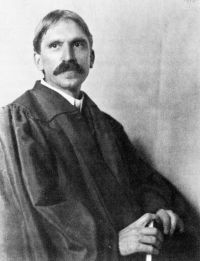 John Dewey,
Democracy and Education
(1916)
John Dewey,
Democracy and Education
(1916)
“ The vocation acts as both magnet to attract and as glue to hold. Such organization of knowledge is vital, because it has reference to needs; it is so expressed and readjusted in action that it never becomes stagnant. No classification, no selection and arrangement of facts, which is consciously worked out for purely abstract ends, can ever compare in solidity or effectiveness with that knit under the stress of an occupation; in comparison the former sort is formal, superficial, and cold. 3. The only adequate training for occupations is training through occupations. ”
Edmund Thompson, Convocation Addresses of the Universities of Bombay and Madras (1892)
“ Add then to the knowledge which you already possess patient study and careful practice, and above all, see that you add to professional ability, the strictest integrity of conduct, without which your career, however brilliant for the time, cannot fail to be attended with disgrace in the end. Recollect the promise which you have just made to maintain on all occasions the purity and reputation of the profession, and never to deviate from the straight path of its honourable exercise. ”
 Johann Gottlieb Fichte,
The Vocation of the Scholar — Lecture II. The Vocation of Man in Society
(1794)
Johann Gottlieb Fichte,
The Vocation of the Scholar — Lecture II. The Vocation of Man in Society
(1794)
“ And in order to fulfil this vocation, and fulfil it always more and more thoroughly, we need a qualification which can only be acquired and improved by culture; and indeed a qualification of a double nature: an ability to give, or to act upon others as upon free beings; and an openness to receive, or to derive the greatest advantage from the action of others upon us. ”
 Hippolyte Taine,
The Modern Regime, Volume 2
Hippolyte Taine,
The Modern Regime, Volume 2
“ The choice rests with himself; he will be what he wants to be, or what he is able to be—professor, engineer, physician, member of the bar, an administrator or a functionary. In each of his qualifications he renders an important service to the public, he exercises an honorable profession; let him be competent and expert, that concerns society. ”
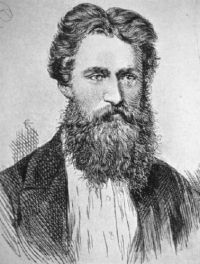 George Smith,
Convocation Addresses of the Universities of Bombay and Madras
(1892)
George Smith,
Convocation Addresses of the Universities of Bombay and Madras
(1892)
“ Gentlemen, a serious duty bearing alike on your professional studies and on the pursuits of your leisure moments is the due and progressive training of your intellectual powers. A serious duty. This training, no longer cribb'd. cabin'd and confin'd by the imperious requirements of examination standards, involves not only the discipline of those faculties whose powers have been cultivated, but also, and more especially of those which are weak or which have been overlooked and neglected. ”
Samuel Smiles, Self Help; with Illustrations of Conduct and Perseverance
“ The examples we have already given of great workers in various branches of industry, art, and science, render it unnecessary further to enforce the importance of persevering application in any department of life. It is the result of every-day experience that steady attention to matters of detail lies at the root of human progress; and that diligence, above all, is the mother of good luck. Accuracy is also of much importance, and an invariable mark of good training in a man. ”
Various, The Builder, No. 1, December 31… (1844)
“ The present effort will be under the chief conduct of one who, from his experience and practice, has derived means and opportunities of knowing the wants, and understanding the interests, of the class to whom he has the honour to belong. And it will be the object at all times to enlist in behalf of this enterprise the talent and services of all superior minds and zealous hearts in the various kindred professions. ”
servant Samuel Adams, The complete servant (1825)
“ It is, therefore, the indispensable duty of every Master to use his best means, that is, to take all proper methods for performance of these covenants. He must endeavour to render his Apprentice skilful and industrious, by due information and constant employment: he must enforce the duties of diligence, frugality, and honesty, by his own example, by kind and gentle usage, and by instilling into his mind the necessity and usefulness of these and all other good and virtuous habits. ”
 Carl Schurz,
Some Object Lessons
(1903)
Carl Schurz,
Some Object Lessons
(1903)
“ Now, on the other hand, contemplate the situation of the public servant who has entered upon his place through the portal of the competitive examination. To begin with, he is proud of owing his success not to the favor of anybody, but to his own personal merit; and there is nothing that stimulates a healthy ambition more than just pride of achievement. ”
George Smith,
Convocation Addresses of the Universities of Bombay and Madras
(1892)
“ Let the profession of your choice be emphatically your life-work. Direct to its study the best powers of your mind. In your professional career propose to yourself an exalted aim and put in its service a persevering fidelity. ”
 Agnes Repplier,
In the dozy hours, and other papers
Agnes Repplier,
In the dozy hours, and other papers
“ In all walks of life, in all kinds of labor, this is the beginning of excellence, and proficiency follows in its wake. We talk so much about thoroughness of training, and so little about singleness of purpose. We give to every girl in our public schools the arithmetical knowledge which enables her to stand behind a counter and cast up her accounts. ”
James Fowler Rusling, Across America; Or, The Great West and the Pacific Coast
“ Here, surely, is evidence of fine talent for organization and management—the best tests of human intellect and capacity—and a hint at the existence of sterling qualities, which the English-speaking nations are slow to credit other races with. ”
Herbert Croly, The Promise of American Life — Chapter V (1909)
“ Like all experts, they had to depend, not upon mere energy, untutored enthusiasm, and good-will, but upon careful training and single-minded devotion to a special task, and at the same time proper provision had to be made for coördinating the results of this highly specialized work. ”
 Georg Ebers,
The Story of My Life — Complete
Georg Ebers,
The Story of My Life — Complete
“ Every human being has a talent for some calling or vocation, and strength for its development. It is the task of the institute to cultivate the powers which are especially requisite for the future fulfilment of the calling appointed by Nature herself. ”
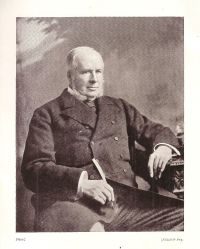 Alexander John Arbuthnot,
Convocation Addresses of the Universities of Bombay and Madras
(1892)
Alexander John Arbuthnot,
Convocation Addresses of the Universities of Bombay and Madras
(1892)
“ But every position has its responsibilities as well as its advantages, and the greater the advantages, so much the more weighty are the obligations which they entail. It is for you to be the interpreters to your countrymen of the principles and of the knowledge which you have acquired in the course of your academical studies, of the training, moral and intellectual, which you have received ”
 William Cobbett,
Advice to Young Men
William Cobbett,
Advice to Young Men
“ What is competence, what is health, if the possessor be a slave, and hold his possessions at the will of another, or others; as he must do if destitute of the right to a share in the making of the laws? What is competence, what is health, if both can, at any moment, be snatched away by the grasp or the dungeon of a master; and his master he is who makes the laws without his participation or assent? ”
 Thomas Hughes,
Memoir of a Brother
Thomas Hughes,
Memoir of a Brother
“ We may safely take examples of skill, activity, and abiding interest in a purpose, from the worst and most selfish men; and those who are wise, as well as good, do take the example, and profit by it. Not but that young persons constitutionally indolent, if they are also conscientious in their duty to their friends, and correct in the general notion that industry in a calling is a duty, do complete their stated hours of study in an honest and competent manner. ”
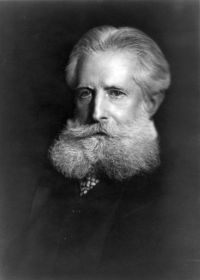 Edmund Clarence Stedman,
The Nature and Elements of Poetry
(1892)
Edmund Clarence Stedman,
The Nature and Elements of Poetry
(1892)
“ I confess that natural aptitude justifies in a measure the expressions "a born lawyer," "a born doctor," etc.; still, more of what we call professional skill is obtained by training than by derivation. ”
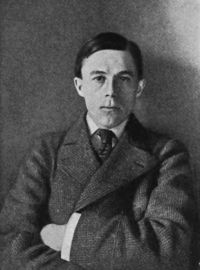 Josiah Flynt,
Notes of an Itinerant Policeman
Josiah Flynt,
Notes of an Itinerant Policeman
“ For the benefit of those who may care to consider seriously the possibilities of the career, it will not be inappropriate, perhaps, to describe the kind of men they may expect to have to associate with while going through their apprenticeship, to explain some of the difficulties that will be encountered, and to make a few suggestions in regard to the training necessary for a successful performance of duty. ”
Jacob Elon Conner, Uncle Sam Abroad
“ Such a process may determine upon a candidate’s preparation—if an examination may be said to determine anything—but it can not reach his personality—what he is,—nor can it reveal his capacity for work—what he can do. ”
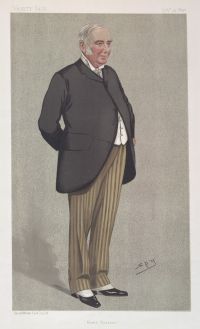 George Findlay,
The Working and Management of an English Railway
(1889)
George Findlay,
The Working and Management of an English Railway
(1889)
“ If the man who is called to the task has a talent for organisation and administration, he will be a law to himself, and if he does not possess these qualifications, no stereotyped rules will avail to supply their place. ”
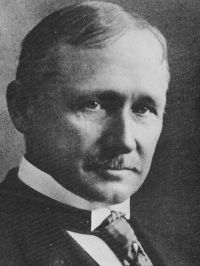 Frederick Winslow Taylor,
The Principles of Scientific Management
(1913)
Frederick Winslow Taylor,
The Principles of Scientific Management
(1913)
“ When one ceases to deal with men in large gangs or groups, and proceeds to study each workman as an individual, if the workman fails to do his task, some competent teacher should be sent to show him exactly how his work can best be done, to guide, help, and encourage him, and, at the same time, to study his possibilities as a workman. ”
Various, Blackwood's Edinburgh Magazine…
“ There is a certain kind of training, the acquisition of a certain cast of thought, which are requisites for statesmen as a class, as much as his legal reading for a lawyer, or his apprenticeship for a handicraftsman. ”
 Keshub Chunder Sen,
Education in India
(1870)
Keshub Chunder Sen,
Education in India
(1870)
“ You give our people education in schools and colleges; but our people demand a practical training also, and if you put them in those higher posts of responsibility and emolument, you give them that practical training and discipline which is so essential to integrity, honesty, and probity, and a successful discharge of high duty. ”
R. G. Latham, Opuscula: Essays chiefly Philological and Ethnographical
“ It never ensures, or professes to ensure, that you shall practise with success to yourself, or even that you shall practise at all. In the eyes of an Examiner, as in those of a commissioner of lunacy, there are but two sorts of individuals; those that can be let loose upon the public, and those that cannot. In the eyes of the public there is every degree of excellence, and every variety of comparative merit or demerit. ”
John Dewey,
Democracy and Education
(1916)
“ One may be an authority in a particular field and yet of more than usually poor judgment in matters not closely allied, unless the training in the special field has been of a kind to ramify into the subject matter of the other fields. ”
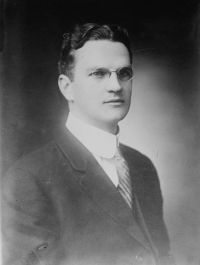 William Trufant Foster,
Should Students Study?
(1917)
William Trufant Foster,
Should Students Study?
(1917)
“ No subjects, properly pursued, are more practical—that is, ultimately practical—for the teacher, the jurist, the editor, the minister, the banker, the city commissioner, the statesman, the legislator, or for the responsible heads of hundreds of business enterprises dealing with large numbers of human beings. ”
 Alice Freeman Palmer,
The Teacher: Essays and Addresses on Education
Alice Freeman Palmer,
The Teacher: Essays and Addresses on Education
“ Not that, but the training of only certain ones among them. The others hang slack. In those regions of ourselves we count for little. We are men of weight only within the range of the powers we have trained; and what a large slice of us lies outside these! Accordingly the general public declares that there is no judgment so bad as the judgment of a specialist. ”
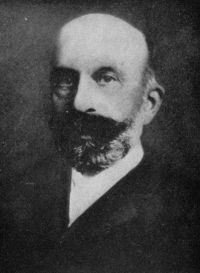 Albion Woodbury Small,
The American Journal of Sociology
(1896)
Albion Woodbury Small,
The American Journal of Sociology
(1896)
“ Competitive examinations, practical in character, and fairly testing the relative capacity of applicants for the discharge of the duties of the position sought, are made compulsory, with the provision that no question shall relate to religious or political opinions. ”
William Miller, Convocation Addresses of the Universities of Bombay and Madras (1892)
“ And doubt not that in the active life before you, you will find abundant opportunity for such service to your fellowmen as the plan of all creation thus summons you to render. Those who have chosen their profession can easily discern the particular benefit that in its exercise they can confer on others. Make the doing of that good your main design. True, it is by your labour you must live, and it would not be right or wise to forget this aspect of the case. ”
Modern Eloquence: Vol III, After-Dinner Speeches P-Z
“ Recently, in the presence of some of you, I spoke at length on the necessity of training men in the institutions of higher learning in this country for the highest duties of citizenship, and especially for practical leadership. ”
 George Birkbeck Norman Hill,
The Life of Sir Rowland Hill and the History of Penny Postage…
George Birkbeck Norman Hill,
The Life of Sir Rowland Hill and the History of Penny Postage…
“ They point out that to obtain suitable men on reasonable terms, it is “necessary to hold out prospects of advancement to those who conduct themselves well, and who manifest the qualifications which are required for superior posts,” so that “by a proper encouragement to merit, economy and efficiency may be combined.” ”
Thomas Brady, Introductory lecture on medical jurisprudence… (1839 | noyear)
“ The Profession to which you belong is the portal to all those places of power, honour, and emolument. In that Profession knowledge and industry are almost sure to attain distinction and pre-eminence. It may be said men have risen to eminence at the bar without the aid of lectures, or the laborious study we now propose. ”
Sir Edward Tyas Cook, The Life of Florence Nightingale…
“ Your own personal qualities, your knowledge and your power of administration, and among greater things your rank and position in Society give you advantages in such a work which no other person possesses. ”
 Leslie Stephen,
Social Rights And Duties: Addresses to Ethical Societies…
Leslie Stephen,
Social Rights And Duties: Addresses to Ethical Societies…
“ But if I say, every office and every profession shall be open to every man; success in it shall depend upon his abilities and merits; and, further, every child in the country shall have the opportunity of acquiring the necessary qualifications, what is that but to accept and to stimulate the spirit of competition? ”
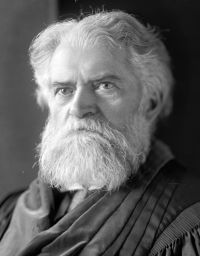 Simon Newcomb,
Side-Lights on Astronomy and Kindred Fields of Popular Science
Simon Newcomb,
Side-Lights on Astronomy and Kindred Fields of Popular Science
“ Laborers whose duties are in a large measure matters of routine must be guided by the skill of a class higher in quality and smaller in number than their own, and these again by the technical knowledge of leaders in research. ”
Arthur H. Smith, Village Life in China: A Study in Sociology
“ As we have already seen, he generally learns well two valuable lessons, and the thoroughness with which they are mastered does much to atone for the great defects of his training in other regards. He learns obedience and respect for authority, and he learns to be industrious. ”
Winston Churchill, The Inside of the Cup — Volume 06
“ Experience taught us that when we embraced one opportunity, one responsibility, the acceptance of it invariably led to another, and so the servant who had five talents, five opportunities, gained ten. ”
