Summary

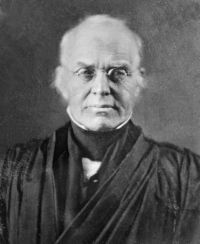
Portrait of Joseph Story Joseph Story Philadelphia and Trenton Railroad Company v…

If every party had a right to introduce evidence at any time, at his own election, without reference to the stage of the trial in which it is offered, it is obvious that the proceedings of the Court would often be greatly embarrassed, the purposes of justice be obstructed, and the parties themselves be surprised by evidence destructive of their rights, which they could not have foreseen, or in any manner have guarded against.
Source: Wikisource

Portrait of Joseph Story Joseph Story Philadelphia and Trenton Railroad Company v…

It might take a year to construct a steamboat, after the inventor had completely mastered all the details of his invention, and had fully explained them to all the various artisans whom he might employ to construct the different parts of the machinery. And yet from those very details and explanations, another ingenious mechanic might be able to construct the whole apparatus, and assume to himself the priority of the invention. The conversations and declarations of a patentee, merely affirming that at some former period he invented that particular machine, might well be objected to.
Source: Wikisource

Portrait of Joseph Story Joseph Story Philadelphia and Trenton Railroad Company v…

Patents for lands, equally with patents for inventions, have been deemed prima facie evidence that they were regularly granted, whenever they have been produced under the great seal of the government; without any recitals or proofs that the prerequisites of the acts under which they have been issued have been duly observed. In cases of patents, the Courts of the United States have gone one step further, and as the patentee is required to make oath that he is the true inventor, before he can obtain a patent, the patent has been deemed prima facie evidence that he has made the invention.
Source: Wikisource

Get perspective with Kwize: daily news enlightened by great literature