Summary

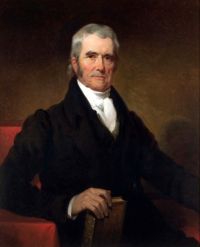
Portrait of John Marshall John Marshall Tayloe v. Riggs — Opinion of the Court

The Court is not prepared to say, that a mere speculative bargain, where the parties know that they are treating for a thing of uncertain value, which depends on unknown contingencies, and may greatly exceed their estimate, or may be nothing; where the purchaser knows that he buys a chance, as a lottery ticket; is a bargain on which the law will raise a promise to refund the purchase money, if the consideration should fail. It is therefore the opinion of the Court, that the testimony does not show a contract which supports the second count.
Source: Wikisource

Portrait of John Marshall John Marshall Tayloe v. Riggs — Opinion of the Court

When we compare the mischief to be apprehended from the admission of secondary proof, on the affidavit of the party, where there is reason to believe that other testimony to that fact cannot be adduced, with the mischief to arise from the absolute exclusion of such an affidavit, we think the views of justice will be best promoted by allowing the affidavit, not as conclusive evidence, but as submitted to the consideration of the Court, to be weighed with the other circumstances of the case.
Source: Wikisource

Portrait of John Marshall John Marshall Tayloe v. Riggs — Opinion of the Court

When parties reduce their contract to writing, the obligations and rights of each are described, and limited by the instrument itself. The safety which is expected from them, would be much impaired, if they could be established upon uncertain and vague impressions made by a conversation antecedent to the reduction of the agreement.
A part of the testimony came out on the cross examination, which serves to show on what uncertain ground the belief of the witness was founded, that the three per cent. depended on the contingency, that the next dividend should amount to four per cent.
Source: Wikisource

Get perspective with Kwize: daily news enlightened by great literature