Summary

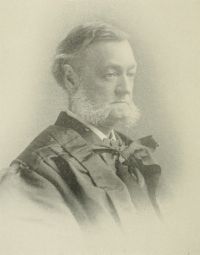
Portrait of George Shiras, Jr. George Shiras, Jr. Lane Bodley Company v. Locke — Opinion of the Court

Courts of equity, it has often been said, will not assist one who has slept upon his rights, and shows no excuse for his laches in asserting them. The plaintiff's excuse in this instance, that he preferred for prudential reasons to receive a salary from the defendant rather than to demand a royalty, is entitled to a less favorable consideration by a court of equity than if his conduct had been that of mere inaction.
Source: Wikisource

Portrait of George Shiras, Jr. George Shiras, Jr. Lane Bodley Company v. Locke — Opinion of the Court

Of course, in testing the position of the court below, that, even if the alleged agreement that the firm of Lane & Bodley should have an interest in the patent, or the facts out of which a license to use would arise, were proven, the plaintiff would nevertheless have no right to recover against the Lane & Bodley Company, we pronounce a legal conclusion on the facts asserted and put in evidence by the defendant.
Source: Wikisource

Portrait of George Shiras, Jr. George Shiras, Jr. Lane Bodley Company v. Locke — Opinion of the Court

Subsequently, and under the laws of another state, a new corporation was formed, to which the receiver of the old corporation assigned certain assets, among which, as was claimed, was the aforesaid license. This court held that whatever right the employer had to the invention by the terms of Hewitt's contract of employment was a naked license to make and sell the patented improvement as a part of its business, which right, if it existed, was a merely personal one, and not transferable, and was extinguished with the dissolution of the corporation.
Source: Wikisource

Get perspective with Kwize: daily news enlightened by great literature