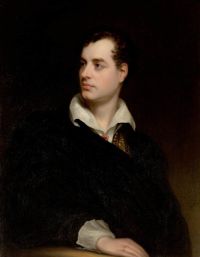
Lord Byron

Lord Byron

The Giaour (1813)

Summary

Portrait of Lord Byron Lord Byron The Giaour (1813)

Think me not thankless - but this grief
Looks not to priesthood for relief.
My soul's estate in secret guess:
But wouldst thou pity more, say less.
When thou canst bid my Leila live,
Then will I sue thee to forgive;
Then plead my cause in that high place
Where purchased masses proffer grace.
Go, when the hunter's hand hath wrung
From forest-cave her shrieking young,
And calm the lonely lioness:
But soothe not - mock not my distress!
'In earlier days, and calmer hours,
When heart with heart delights to blend,
Where bloom my native valley's bowers
I had - Ah! have I now?
Source: Wikisource

Portrait of Lord Byron Lord Byron The Giaour (1813)

What once were feelings in that face:
Time hath not yet the features fixed,
But brighter traits with evil mixed;
And there are hues not always faded,
Which speak a mind not all degraded
Even by the crimes through which it waded:
The common crowd but see the gloom
Of wayward deeds, and fitting doom;
The close observer can espy
A noble soul, and lineage high:
Alas! though both bestowed in vain,
Which grief could change, and guilt could stain,
It was no vulgar tenement
To which such lofty gifts were lent,
And still with little less than dread
On such the sight is riveted.
Source: Wikisource

Portrait of Lord Byron Lord Byron The Giaour (1813)

Such moment pours the grief of years:
What felt he then, at once opprest
By all that most distracts the breast?
That pause, which pondered o'er his fate,
Oh, who its dreary length shall date!
Though in time's record nearly nought,
It was eternity to thought!
For infinite as boundless space
The thought that conscience must embrace,
Which in itself can comprehend
Woe without name, or hope, or end.
Source: Wikisource

Get perspective with Kwize: daily news enlightened by great literature