Summary

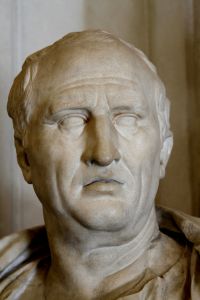
Portrait of Marcus Tullius Cicero Marcus Tullius Cicero Letters to Atticus — 3.15 (LXXII)

But it is foolish for me to be laying down rules as to what you are to do and how. I only wish that something may be done! And it is on that point that your letter displays much reserve: I presume, to prevent my being too much agitated by despair. For what action do you see possible to be taken, or in what way? Through the senate? But you yourself told me that Clodius had fixed upon the doorpost of the senate-house a certain clause in the law, "that it might neither be put to the house nor mentioned."
Source: Wikisource

Portrait of Marcus Tullius Cicero Marcus Tullius Cicero Letters to Atticus — 3.15 (LXXII)

How came it about also that Clodius held his tongue, when those you mention in your letter both spoke on the subject and demanded that a motion should be brought in? But if you go to the people--can it be carried except with the unanimous approval of the tribunes? What about my property? What about my house? Will it be possible to have it restored? Or, if that cannot, how can I be? Unless you see these difficulties on the way to be solved, what is the hope to which you invite me? But if, again, there is no hope, what sort of life is there for me?
Source: Wikisource

Portrait of Marcus Tullius Cicero Marcus Tullius Cicero Letters to Atticus — 3.15 (LXXII)

For if you cannot find yourself separated from one individual like myself without sorrow, what do you think must be my case, who am deprived both of you and of everyone else? And if you, while still in possession of all your rights, miss me, to what an extent do you think those rights are missed by me? I will not enumerate the things of which I have been despoiled, not only because you are not ignorant of them, but also lest I should reopen my own sorrow.
Source: Wikisource

Get perspective with Kwize: daily news enlightened by great literature