Summary

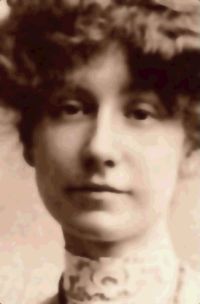
Portrait of Marjorie Bowen Marjorie Bowen "And the World Went Very Well Then" (1924)

The unshaded electric light in the carriage glittered on a little necklace of seed pearls that, was to be Mary's Christmas present, and a handsome diamond that was to be her engagement ring.
Brograve's smile deepened. It was quite delightful to think of Mary's pleasure and gratitude, and how pretty the milky beads would look round the girl's white throat, and how brightly the ring would sparkle on her slender finger; he had been generous, and it was a stone of which neither of them need be ashamed.
Source: Wikisource

Portrait of Marjorie Bowen Marjorie Bowen "And the World Went Very Well Then" (1924)

Nor did Miss Aubrey make any allusion to either of these detestable matters. She was gracious and sweet as the pale, fragrant sunshine, and greeted Brograve as if he was an old friend.
And Brograve, as he held the warm hand slipped from the big muff for a delicious second, realised the old truth that time counts for nothing in human relationships. Had he known this woman all her life, he could not have loved her more deeply, more eternally.
Source: Wikisource

Portrait of Marjorie Bowen Marjorie Bowen "And the World Went Very Well Then" (1924)

Miss Aubrey looked at him intently, but without surprise.
"I bought it," continued Brograve, as they swung out through the woods, "in the Charing Cross Road, and I have it in my pocket now."
"Do you think so much of it?" asked Miss Aubrey.
"I think everything of it. When you stepped into the train last night, I felt as if a miracle had happened," replied the rapt young man.
"Some things are like miracles," said Miss Aubrey drowsily.
Brograve took out the cherished print and showed it to her; the winter sunshine flicked over the discoloured sheet as he held it between them.
Source: Wikisource

Get perspective with Kwize: daily news enlightened by great literature