Summary

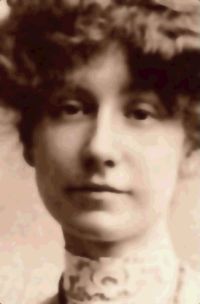
Portrait of Marjorie Bowen Marjorie Bowen The Viper of Milan — Publisher's Preface (1906)

It is the soul of desire, of desire for the dream realized. Such is the desire even of a Visconti, and the soul of such a man makes him as simple to seize upon as the ogre of a fairy tale.
A fairy tale!—historical novels are all fairy tales, or approximate to fairy tales, for the same reason, perhaps, that all the fairies, Puck, Oberon and the rest of them, were once people in history. Under all the complexity and confusion of man's mental life there lies the invincible demand for the simple and the absolute in his view of the past as of the universe.
Source: Wikisource

Portrait of Marjorie Bowen Marjorie Bowen The Viper of Milan — Publisher's Preface (1906)

But it should be remembered that what proceeds from the mind, and is part of it, can always be renewed from the mind, and that forms in art are constantly being revitalized by some fresh creative impulse. And so often as there shall appear a writer like Miss Bowen capable of properly appraising the past, not as a shop stuffed with strange articles of attire and antiquities, but as a splendid stage set for the performance of a moving human drama, just so often will the historical novel renew its attraction over the minds of all men in new creations.
Source: Wikisource

Portrait of Marjorie Bowen Marjorie Bowen The Viper of Milan — Publisher's Preface (1906)

She makes no attempt at an elaborate reconstruction of an epoch, but surrenders herself rather to that plastic spirit of an age which molds the souls of its men and women and makes them the channel of characteristic expression in thought, feeling and action. Actually, we know of no novel that gives a more concrete, vivid and brilliant impression of the Italy of the early Renaissance; but as a matter of fact there is a total absence of that set description which forms the staple of the ordinary historical novel.
Source: Wikisource

Get perspective with Kwize: daily news enlightened by great literature