Summary

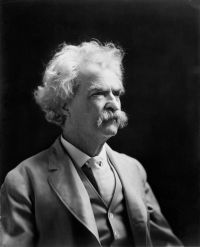
Portrait of Mark Twain Mark Twain Christian Science — Conclusion (1907)

Now then, can Christian Science introduce the Congressional Blush? There are Christian Private Morals, but there are no Christian Public Morals, at the polls, or in Congress or anywhere else—except here and there and scattered around like lost comets in the solar system. Can Christian Science persuade the nation and Congress to throw away their public morals and use none but their private ones henceforth in all their activities, both public and private?
Source: Wikisource

Portrait of Mark Twain Mark Twain Christian Science — Conclusion (1907)

In their private life they are true to every obligation of honor; yet in every session they violate them all, and do it without shame; because honor to party is above honor to themselves. It is an accepted law of public life that in it a man may soil his honor in the interest of party expediency—must do it when party expediency requires it. In private life those men would bitterly resent—and justly—any insinuation that it would not be safe to leave unwatched money within their reach
Source: Wikisource

Portrait of Mark Twain Mark Twain Christian Science — Conclusion (1907)

The present Christianity makes an excellent private Christian, but its endeavors to make an excellent public one go for nothing, substantially.
This is an honest nation—in private life. The American Christian is a straight and clean and honest man, and in his private commerce with his fellows can be trusted to stand faithfully by the principles of honor and honesty imposed upon him by his religion. But the moment he comes forward to exercise a public trust he can be confidently counted upon to betray that trust in nine cases out of ten, if "party loyalty" shall require it.
Source: Wikisource

Get perspective with Kwize: daily news enlightened by great literature