Summary

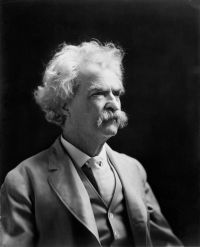
Portrait of Mark Twain Mark Twain Life on the Mississippi — Appendix C (1883)

It is impossible for any one who knows the country not to see that Captain Hall earnestly sought out things to admire and commend. When he praises, it is with evident pleasure; and when he finds fault, it is with evident reluctance and restraint, excepting where motives purely patriotic urge him to state roundly what it is for the benefit of his country should be known.
Source: Wikisource

Portrait of Mark Twain Mark Twain Life on the Mississippi — Appendix C (1883)

The candor which he expresses, and evidently feels, they mistake for irony, or totally distrust; his unwillingness to give pain to persons from whom he has received kindness, they scornfully reject as affectation, and although they must know right well, in their own secret hearts, how infinitely more they lay at his mercy than he has chosen to betray; they pretend, even to themselves, that he has exaggerated the bad points of their character and institutions
Source: Wikisource

Portrait of Mark Twain Mark Twain Life on the Mississippi — Appendix C (1883)

So deep is the conviction of this singular people that they cannot be seen without being admired, that they will not admit the possibility that any one should honestly and sincerely find aught to disapprove in them or their country.
The American Reviews are, many of them, I believe, well known in England; I need not, therefore, quote them here, but I sometimes wondered that they, none of them, ever thought of translating Obadiah's curse into classic American; if they had done so, on placing (he, Basil Hall) between brackets, instead of (he, Obadiah) it would have saved them a world of trouble.
Source: Wikisource

Get perspective with Kwize: daily news enlightened by great literature