Summary

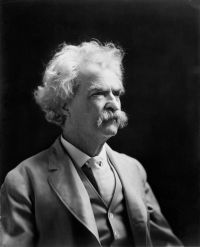
Portrait of Mark Twain Mark Twain,  The Innocents Abroad — Chapter LIII. (1869)

“ And so I close my chapter on the Church of the Holy Sepulchre—the most sacred locality on earth to millions and millions of men, and women, and children, the noble and the humble, bond and free. In its history from the first, and in its tremendous associations, it is the most illustrious edifice in Christendom. With all its clap-trap side-shows and unseemly impostures of every kind, it is still grand, revered, venerable—for a god died there; for fifteen hundred years its shrines have been wet with the tears of pilgrims from the earth’s remotest confines ”
Source: Wikisource

Portrait of Mark Twain Mark Twain,  The Innocents Abroad — Chapter LIII. (1869)

“ Even in our own day a war, that cost millions of treasure and rivers of blood, was fought because two rival nations claimed the sole right to put a new dome upon it. History is full of this old Church of the Holy Sepulchre—full of blood that was shed because of the respect and the veneration in which men held the last resting-place of the meek and lowly, the mild and gentle, Prince of Peace! ”
Source: Wikisource

Portrait of Mark Twain Mark Twain,  The Innocents Abroad — Chapter LIII. (1869)

“ No blade in Christendom wields such enchantment as this—no blade of all that rust in the ancestral halls of Europe is able to invoke such visions of romance in the brain of him who looks upon it—none that can prate of such chivalric deeds or tell such brave tales of the warrior days of old. It stirs within a man every memory of the Holy Wars that has been sleeping in his brain for years, and peoples his thoughts with mail-clad images, with marching armies, with battles and with sieges. ”
Source: Wikisource

Get perspective with Kwize: daily news enlightened by great literature