Summary

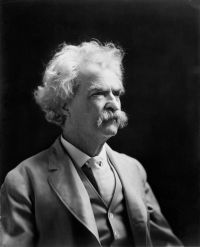
Portrait of Mark Twain Mark Twain The Prince and the Pauper, Part 4

Men born and reared upon the Bridge found life unendurably dull and inane elsewhere. History tells of one of these who left the Bridge at the age of seventy-one and retired to the country. But he could only fret and toss in his bed; he could not go to sleep, the deep stillness was so painful, so awful, so oppressive. When he was worn out with it, at last, he fled back to his old home, a lean and haggard spectre, and fell peacefully to rest and pleasant dreams under the lulling music of the lashing waters and the boom and crash and thunder of London Bridge.
Source: Gutenberg

Portrait of Mark Twain Mark Twain The Prince and the Pauper, Part 4

Canty drew back. "Now mark ye," continued Hendon, "I took this lad under my protection when a mob of such as thou would have mishandled him, mayhap killed him; dost imagine I will desert him now to a worser fate?—for whether thou art his father or no—and sooth to say, I think it is a lie—a decent swift death were better for such a lad than life in such brute hands as thine. So go thy ways, and set quick about it, for I like not much bandying of words, being not over-patient in my nature."
John Canty moved off, muttering threats and curses, and was swallowed from sight in the crowd.
Source: Gutenberg

Portrait of Mark Twain Mark Twain The Prince and the Pauper, Part 4

Children were born on the Bridge, were reared there, grew to old age, and finally died without ever having set a foot upon any part of the world but London Bridge alone. Such people would naturally imagine that the mighty and interminable procession which moved through its street night and day, with its confused roar of shouts and cries, its neighings and bellowing and bleatings and its muffled thunder-tramp, was the one great thing in this world, and themselves somehow the proprietors of it.
Source: Gutenberg

Get perspective with Kwize: daily news enlightened by great literature