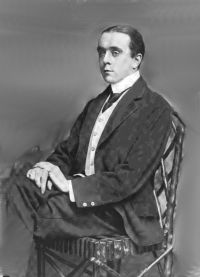
Max Beerbohm

Max Beerbohm

Summary

Portrait of Max Beerbohm Max Beerbohm The Naming of Streets (1902)

And I doubt not that for him, as for me, the mere sound or sight of a street's name conjures up the sensation he feels when he passes through that street. For him, probably, the name of every street has hitherto seemed to be also its exact, inevitable symbol, a perfect suggestion of its character. He has believed that the grand or beautiful streets have grand or beautiful names, the mean or ugly streets mean or ugly names. Let me assure him that this is a delusion. The name of a street, as of a human being, derives its whole quality from its bearer.
Source: Wikisource

Portrait of Max Beerbohm Max Beerbohm The Naming of Streets (1902)

How can an English Street whose name is derived from New York have any native character? How, moreover, can a street that has an ugly name ever suggest anything but ugliness? Further, why should we miss the chance of commemorating some great Englishman—ancient or modern, King Alfred or General Buller—by conferring on this new street his illustrious name? Now, let me soothe these querists by showing that a name cannot (in the long run) make any shadow of difference in our sentiment for the street that bears it, for that our sentiment is solely according to the character of the street itself
Source: Wikisource

Portrait of Max Beerbohm Max Beerbohm The Naming of Streets (1902)

In Pont Street my demeanour is not so calm and measured. I feel less sure of myself, and adopt a slight swagger. In High Street, Kensington, I find myself dapper and respectable, with a slight leaning to the fine arts. In High Street, Notting Hill, I become frankly common. Fleet Street fills me with a conviction that if I don't make haste I shall be jeopardising the national welfare.
Source: Wikisource

Get perspective with Kwize: daily news enlightened by great literature