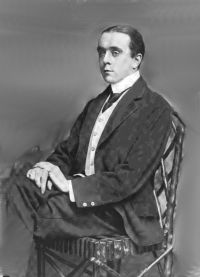
Max Beerbohm

Max Beerbohm

Summary

Portrait of Max Beerbohm Max Beerbohm William and Mary (1920)

Was the cottage still standing? Presently, I climbed over the gate, and walked through the long grass, and—yes, there was Mary's cottage; still there; William's and Mary's cottage. Trite enough, I have no doubt, were the thoughts that possessed me as I stood gazing. There is nothing new to be thought about the evanescence of human things; but there is always much to be felt about it by one who encounters in his maturity some such intimate instance and reminder as confronted me, in that cold sunshine, across that small wilderness of long rank wet grass and weeds.
Source: Wikisource

Portrait of Max Beerbohm Max Beerbohm William and Mary (1920)

MEMORIES, like olives, are an acquired taste. William and Mary (I give them the Christian names that were indeed theirs—the joint title by which their friends always referred to them) were for some years an interest in my life, and had a hold on my affection. But a time came when, though I had known and liked them too well ever to forget them, I gave them but a few thoughts now and then. How, being dead, could they keep their place in the mind of a young man surrounded with large and constantly renewed consignments of the living? As one grows older, the charm of novelty wears off.
Source: Wikisource

Portrait of Max Beerbohm Max Beerbohm William and Mary (1920)

One finds that there is no such thing as novelty—or, at any rate, that one has lost the faculty for perceiving it. One sees every newcomer not as something strange and special, but as a ticketed specimen of this or that very familiar genus. The world has ceased to be remarkable; and one tends to think more and more often of the days when it was so very remarkable indeed.
I suppose that had I been thirty years older when first I knew him William would have seemed to me little worthier of attention than a penny-halfpenny postage-stamp seems to-day.
Source: Wikisource

Get perspective with Kwize: daily news enlightened by great literature