Summary

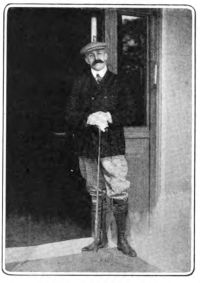
Portrait of Max Pemberton Max Pemberton The Sea Wolves — XI. ON THE FIELD Of THE AFTER-MATH (1901)

Day broke with southern maturity, a day of relentless sun and intermittent breeze; and the warmth was as wine to the men marooned by the act of God in the haven of Galicia. Even Kenner, who had been very near to death, felt the blood coursing through his veins again; and Fisher slept upon a sheet of sand, regardless of the powerful rays which, even in the hours of the early morning, poured down upon him. Messenger alone, shivering and silent, was cowed into the depths of melancholy by the overwhelming visitation which had fallen upon the yacht.
Source: Wikisource

Portrait of Max Pemberton Max Pemberton The Sea Wolves — XI. ON THE FIELD Of THE AFTER-MATH (1901)

Look at him now striding along at six mile an hour, and halloaing at the hill to clear his lungs of salt; you'd think he'd got a patch in his head if you didn't know him."
"He's not halloaing at the hill," cried Fisher; "he's calling to someone. There's a man running along the sand, and it looks like old Burke! It is, too, as I'm alive! What luck!"
On this he began to dress, with a disregard for the niceties of the toilet which was admirable; and Kenner, taking heart that another lived, stood up on his feet, and lurched along with him toward the distant men.
Source: Wikisource

Portrait of Max Pemberton Max Pemberton The Sea Wolves — XI. ON THE FIELD Of THE AFTER-MATH (1901)

What we're wanting is a gig and a rope to begin on, and after that the dark to work in."
"Why the dark?" said Kenner, to whom night had become a terror. "Give me day, and take your dark to blazes!"
"He's quite right," said Messenger; "I've thought of that from the first. There must be some sort of coastguard here, and once we're sighted the thing will ring through Europe, and we'll have to listen to the music. Safety doesn't lay out on this shore here; it lays up in the hills and under what cover we can get.
Source: Wikisource

Get perspective with Kwize: daily news enlightened by great literature