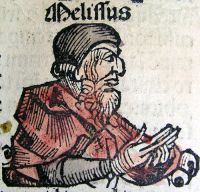
Melissus of Samos

Melissus of Samos

Summary

Portrait of Melissus of Samos Melissus of Samos Fragments of Melissus (1920)

Now these things do not agree with one another. We said that there were many things that were eternal and had forms and strength of their own, and yet we fancy that they all suffer alteration, and that they change from what we see each time. It is clear, then, that we did not see aright after all, nor are we right in believing that all these things are many. They would not change if they were real, but each thing would be just what we believed it to be; for nothing is stronger than true reality. But if it has changed, what was has passed away, and what was not is come into being.
Source: Wikisource

Portrait of Melissus of Samos Melissus of Samos Fragments of Melissus (1920)

For if there is earth and water, and air and iron, and gold and fire, and if one thing is living and another dead, and if things are black and white and all that men say they really are,—if that is so, and if we see and hear aright, each one of these must be such as we first decided, and they cannot be changed or altered, but each must be just as it is. But, as it is, we say that we see and hear and understand aright, and yet we believe that what is warm becomes cold, and what is cold warm; that what is hard turns soft, and what is soft hard
Source: Wikisource

Portrait of Melissus of Samos Melissus of Samos Fragments of Melissus (1920)

Nor is anything empty: For what is empty is nothing. What is nothing cannot be.
Nor does it move; for it has nowhere to betake itself to, but is full. For if there were aught empty, it would betake itself to the empty. But, since there is naught empty, it has nowhere to betake itself to.
Source: Wikisource

Get perspective with Kwize: daily news enlightened by great literature