Summary

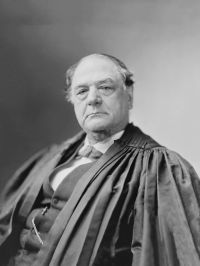
Portrait of Noah Haynes Swayne Noah Haynes Swayne Carrol v. Green — Opinion of the Court

Debt, A, 1.
Individual liability is repugnant to the law of corporations, and qualifies in this case an exemption which would otherwise exist. Stockholders in such cases are liable according to the plain meaning of the terms employed by the legislature, and not otherwise. The section is silent as to a preference to any class of creditors. All, therefore, in this case, stood upon a footing of equality, and were entitled to share alike in the proceeds of the litigation. The remedy against the stockholders was necessarily in equity.
Source: Wikisource

Portrait of Noah Haynes Swayne Noah Haynes Swayne Carrol v. Green — Opinion of the Court

It is obvious from this statement, that, if there had been a suit at law against the stockholders, debt could not have been maintained.
The action of debt lies on a statute where it is brought for a sum certain, or where the sum is capable of being readily reduced to a certainty. It is not sustainable for unliquidated damages. 1 Ch. Pl. 108, 113; Stockwell v. United States, 13 Wall. 542.
'The action of debt is in legal contemplation for the recovery of a debt eo nomine and in numero.' 'Case, now usually called assumpsit,' is founded on a contract express or implied.
Source: Wikisource

Portrait of Noah Haynes Swayne Noah Haynes Swayne Carrol v. Green — Opinion of the Court

By taking the stock, the terms were acceded to, the contract became complete, and the stockholders were bound accordingly. The same result followed which would have ensued under the like circumstances between individuals. The assent thus given and the promise implied are of the essence of the liability sought to be enforced in this proceeding. If a remedy at law were necessary, clearly it must have been case.
Case is a generic term, which embraces many different species of actions.
Source: Wikisource

Get perspective with Kwize: daily news enlightened by great literature