Summary

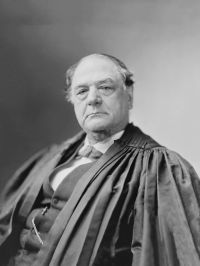
Portrait of Noah Haynes Swayne Noah Haynes Swayne Jones v. New York Guaranty and Indemnity Company…

In both these latter case the ultimate result with respect to the security would be just the same as if the mortgage were given for a pre-existing debt in literal compliance with the statute. No one could be wronged or injured, while the corporation, whom it was the purpose of the law to aid, might be materially benefited. Is not such a departure within the meaning, if not the letter, of the statute? There would be no more danger of the abuse of the power conferred than if it were exercised in the manner insisted upon.
Source: Wikisource

Portrait of Noah Haynes Swayne Noah Haynes Swayne Jones v. New York Guaranty and Indemnity Company…

Our view is not without support from the language of the statute, that 'every mortgage so made shall be as valid to all intents and purposes as if executed by an individual owning such real estate.' If this mortgage had been given by individuals, the question we are examining doubtless would not have been brought before us for consideration.
Source: Wikisource

Portrait of Noah Haynes Swayne Noah Haynes Swayne Jones v. New York Guaranty and Indemnity Company…

The learned counsel for the appellant insisted that a mortgage could be competently given by the Oil Company only to secure a debt incurred in its business and already subsisting. This, we think, is too narrow a construction of the language of the law. A thing may be within a statute but not within its letter, or within the letter and yet not within the statute. The intent of the law-maker is the law.
Source: Wikisource

Get perspective with Kwize: daily news enlightened by great literature