Summary

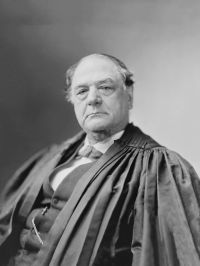
Portrait of Noah Haynes Swayne Noah Haynes Swayne Lake Shore and Michigan Southern Railroad Company v…

On the 14th of July, 1870, Rose, the proper internal revenue officer of the United States, assessed against the plaintiff the sum of $9,270.50 as a tax of five per cent upon the amount so paid over to the bondholders. Payment was compelled by the seizure of property. The amount of the tax paid to the collector is alleged to have been exacted without warrant of law, and this suit was instituted to recover it back.
Source: Wikisource

Portrait of Noah Haynes Swayne Noah Haynes Swayne Lake Shore and Michigan Southern Railroad Company v…

It would be a waste of time to reproduce any thing said in that opinion. It is sufficient for our purpose to refer to the argument there to be found. If this view be correct, it is conclusive of the case.
But conceding, for the purposes of this opinion, that we are in error upon the point we have considered, and that the limitation did terminate the tax prescribed in sect. 122, and in the other sections specified in the seventeenth section of the act of 1870, then it is clear that the section last named revived the sections therein named, including sect.
Source: Wikisource

Portrait of Noah Haynes Swayne Noah Haynes Swayne Lake Shore and Michigan Southern Railroad Company v…

The tax specified in sect. 122 was levied upon railroad, canal, turnpike, canal navigation, and slack-water companies. The section did not include the tax upon the income of individuals. That was provided for always in other separate and distinct sections. Sect. 122, as amended, was in force when the act of 1870 was passed, and, without further legislation, would have continued in force indefinitely, unless there was a previous limit to its duration imposed by the act of March 2, 1867, 14 Stat.
Source: Wikisource

Get perspective with Kwize: daily news enlightened by great literature