Summary

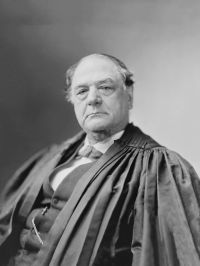
Portrait of Noah Haynes Swayne Noah Haynes Swayne Lewis v. United States — Opinion of the Court

The United States are in no wise bound by the Bankrupt Act. The clause above quoted is in pari materia with the several acts giving priority of payment to the United States, and was doubtless put in to recognize and reaffirm the rights which those statutes give, and to exclude the possibility of a different conclusion. That the claim of the United States was not proved in the bankruptcy proceedings in question is, therefore, quite immaterial in this case.
Source: Wikisource

Portrait of Noah Haynes Swayne Noah Haynes Swayne Lewis v. United States — Opinion of the Court

The Bankrupt Law declares that the United States shall be first paid; the fifth section of the statute of 1797 enacts, that, where there is a debt and bankruptcy, they shall have priority of payment. Neither statute contains any qualification, and we can interpolate none. Our duty is to execute the law as we find it; not to make it. It would be a singular equity which would drive the appellees 'beyond sea' to carry through a litigation of uncertain duration, and results against parties there before they can be permitted to proceed against the parties and property here.
Source: Wikisource

Portrait of Noah Haynes Swayne Noah Haynes Swayne Lewis v. United States — Opinion of the Court

The United States were under no obligation to pursue the partnership effects of Cooke, McCulloch, & Co. before filing this bill. The bankruptcy of the American partners dissolved the firm of Cooke, McCulloch, & Co., not only as to themselves, but also, inter se, as to the solvent partners. In analogy to the proceeding at law, where there are joint debtors and one is beyond the reach of the process of the court, and equity has jurisdiction, a decree may be taken against the other for the whole amount due.
Source: Wikisource

Get perspective with Kwize: daily news enlightened by great literature