Summary

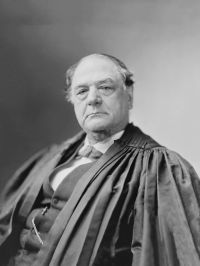
Portrait of Noah Haynes Swayne Noah Haynes Swayne Sullivan v. Portland and Kennebec Railroad Company…

When the arrangement between the old company and the debt-holders was complete, it was equally effectual and conclusive upon those parties, whether the preferred stockholders did or did not thereafter take any action. There was no assignment or transfer of any interest in the mortgage. There was simply a release and extinguishment of so much of the liability secured, and, by consequence, of the lien and existence of the mortgage to that extent. Thereafter the liability and the mortgage were as if they had never been for any thing more.
Source: Wikisource

Portrait of Noah Haynes Swayne Noah Haynes Swayne Sullivan v. Portland and Kennebec Railroad Company…

The complainants were supine and silent for more than seventeen years. In the mean time, the Kennebec and Portland company became hopelessly and finally insolvent, and its affairs a wreck. Proceedings were instituted to foreclose the second mortgage, and brought to a close. The company lost all its property, and has since existed only in name. A new corporation has come into existence, and acquired and owns all the property and effects lost by the old one.
Source: Wikisource

Portrait of Noah Haynes Swayne Noah Haynes Swayne Sullivan v. Portland and Kennebec Railroad Company…

On the 16th of December, 1853, the company ordered three per cent to be paid on the 1st of January then next to all the holders of the new certificates for the preferred stock.
The company became hopelessly insolvent. The trustees of the second mortgage foreclosed that mortgage. The foreclosure was perfected and became absolute in May, 1862. In November, 1862, the bondholders under that mortgage formed a new corporation, by the name of the Portland and Kennebec Company. The trustees conveyed to this company.
Source: Wikisource

Get perspective with Kwize: daily news enlightened by great literature