Summary

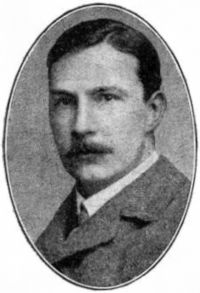
Portrait of Oliver Onions Oliver Onions Back o' the Moon, and Other Stories… (1906)

The tall pieceboards became an avenue of legs regularly moving—legs in casings of hide, in wrappings of straw-band, calves and tibias in stockings of grey and white and blue and brown—and an appalling racket of sound arose. In a second they had taken their time from the original clackers; the rhythmic high noise filled the market-place, rang under the Piece Hall arches, spread in a harsh, splitting cascade to the hills, affronted the sense of hearing. A man from Booth tossed up a pigeon.
Source: Wikisource

Portrait of Oliver Onions Oliver Onions Back o' the Moon, and Other Stories… (1906)

Under the arches of the raised Piece Hall the fullers and dyers and merchants moved, and the arcades sounded with the shuffle of their leather shoes and the hum of their voices as they discussed the arrival of the new Supervisor of Excise, now breakfasting in the “Cross Pipes” opposite. The bailiff's books, wherein he entered his proper market charges, lay unopened on the small table at the top of the steps, and his two clerks moved among the Back o' th' Mooiners at the pieceboards.
Source: Wikisource

Portrait of Oliver Onions Oliver Onions Back o' the Moon, and Other Stories… (1906)

Monjoy.... I should say, now, that a great variety of saxifrages is to be found on your hills?”
“Best let the hills alone; these gentlemen at the pieceboards are not always in a merry humour. Come and see the market.”
As Monjoy passed up the square with the supervisor, talking pleasantly, and explaining that save for the cloth-staple the district would be a wilderness, cachinnations, as if at some hidden jest, passed along the pieceboards. For all the bell had rung, not a man had unstrapped his budget.
Source: Wikisource

Get perspective with Kwize: daily news enlightened by great literature