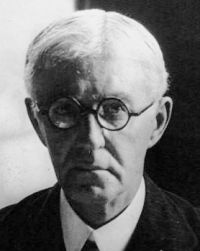
Peter Chalmers Mitchell

Peter Chalmers Mitchell

Summary

Portrait of Peter Chalmers Mitchell Peter Chalmers Mitchell 1911 Encyclopedia Britannica (1911)

The actual boundaries between animals and plants are artificial; they are rather due to the ingenious analysis of the systematist than actually resident in objective nature. The most obvious distinction is that the animal cell-wall is either absent or composed of a nitrogenous material, whereas the plant cell-wall is composed of a carbohydrate material—cellulose. The animal and the plant alike require food to repair waste, to build up new tissue and to provide material which, by chemical change, may liberate the energy which appears in the processes of life.
Source: Wikisource

Portrait of Peter Chalmers Mitchell Peter Chalmers Mitchell 1911 Encyclopedia Britannica (1911)

An animal may be defined as a living organism, the protoplasm of which does not secrete a cellulose cell-wall, and which requires for its existence proteid material obtained from the living or dead bodies of existing plants or animals. The common use of the word animal as the equivalent of mammal, as opposed to bird or reptile or fish, is erroneous.
Source: Wikisource

Portrait of Peter Chalmers Mitchell Peter Chalmers Mitchell 1911 Encyclopedia Britannica (1911)

The distinctions between animals and plants are in fact obviously secondary and adaptive, and point clearly towards the conception of a common origin for the two forms of life, a conception which is made still more probable by the existence of many low forms in which the primary differences between animals and plants fade out.
Source: Wikisource

Get perspective with Kwize: daily news enlightened by great literature