Summary

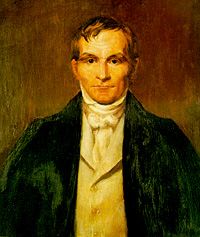
Portrait of Philip Pendleton Barbour Philip Pendleton Barbour Atkins v. Dick — Opinion of the Court

We cannot, therefore, perceive any ground upon which, in a contest between two parties to a bill, founded upon an allegation of equity attaching personally to one of them, a third party can be brought into a Court of Equity to mingle in that litigation, when the attitude in which he stands is purely legal. If the equity attached to him, then he ought to be made a party: but as it does not, a Court of Equity is not the forum in which to discuss or to decide either his right or liability.
Source: Wikisource

Portrait of Philip Pendleton Barbour Philip Pendleton Barbour Atkins v. Dick — Opinion of the Court

And upon this state of facts, it is clear that the same operation which satisfied the claim of Dick and Company, at the same time extinguished all the rights as well as liabilities growing out of the bill of exchange: because they, being the last endorsers, were the persons entitled to receive the amount of the bill; and the drawers being liable to every other party, and the funds by which the payment was effected being furnished by them, there was no longer any person who could have a claim against any other, founded upon a bill thus paid.
Source: Wikisource

Get perspective with Kwize: daily news enlightened by great literature