Summary

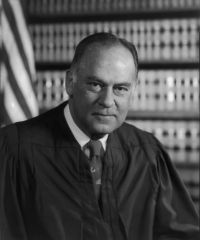
Portrait of Potter Stewart Potter Stewart United States v. Gainey — Opinion of the Court

We cannot agree. Our Constitution places in the hands of the trial judge the responsibility for safeguarding the integrity of the jury trial, including the right to have a case withheld from the jury when the evidence is insufficient as a matter of law to support a conviction. The statute before us deprives the trial judge of none of his normal judicial powers. We do not interpret the provision in the statute that unexplained 'presence * * * shall be deemed sufficient evidence to authorize conviction' as in any way invading the province of the judge's discretion.
Source: Wikisource

Portrait of Potter Stewart Potter Stewart United States v. Gainey — Opinion of the Court

Congress was undoubtedly aware that manufacturers of illegal liquor are notorious for the deftness with which they locate arcane spots for plying their trade. Legislative recognition of the implications of seclusion only confirms what the folklore teaches-that strangers to the illegal business rarely penetrate the curtain of secrecy. [6] We therefore hold that § 5601 (b) (2) satisfies the test of Tot v. United States, supra.
But it is said that this statute is unconstitutional upon a different ground-that it impinges upon the trial judge's powers over the judicial proceeding.
Source: Wikisource

Portrait of Potter Stewart Potter Stewart United States v. Gainey — Opinion of the Court

It is possible under the law for an innocent man to be present at a distillery, and it is possible for him to run when about to be apprehended, and such an innocent man ought never to be convicted, but presence at a distillery, if you think these men were present, is a circumstance to be considered along with all the other circumstances in the case in determining whether they were connected with the distillery or not.
Source: Wikisource

Get perspective with Kwize: daily news enlightened by great literature