Summary

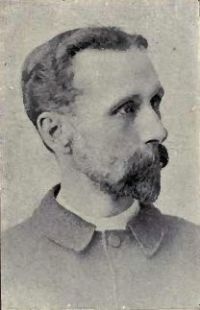
Portrait of Ralph Connor Ralph Connor The Gaspards of Pine Croft: A Romance of the Windermere

If ever there was a puzzled man it was “Squatty.” His astonishment completely neutralised his rage. His eye ran up and down over the slight, boyish figure. He still felt that steel-like grip that had held him helpless.
“Say, kid, we’ll call it a game,” he said, offering his hand. “You don’t need to get no horse for me.”
“Sure, I will, Squatty,” said Paul, heartily shaking his hand. “I’m not as tired as I was.”
He swung himself on his pony and loped off after the foreman’s horse, leaving a group behind him dumb with mingled surprise and admiration. It was Molly who broke the impressive silence.
Source: Gutenberg

Portrait of Ralph Connor Ralph Connor The Gaspards of Pine Croft: A Romance of the Windermere

As the minister touched the boy’s arm the flame leaped from the gun muzzle, the flying figure stumbled, fell, rose and disappeared in the underbrush.
“Paul! Paul! what are you doing? Stop! Stop! Listen to me, Paul.” The minister’s arms were thrown around the boy. But like one possessed and with a man’s strength the sinewy muscles writhed free from the encircling arms.
Breathless, bewildered, the boy stood a moment, summoning his wits and his strength, when from the doorway a voice came gasping, “Paul, boy! I want you.”
“Daddy!” cried the boy, and flinging his gun down he ran toward his father.
Source: Gutenberg

Portrait of Ralph Connor Ralph Connor The Gaspards of Pine Croft: A Romance of the Windermere

Then, too, the boy, the little boy—his little son—for whom he was responsible before God—yes, and, if it were known to them, before all honourable men, and that meant in his own sight. Was man ever so cornered by fate, nay, by his own doings?
“I will see you tomorrow, Onawata,” he said more gently. “I will come to your camp tomorrow.” He laid his hand upon her shoulder. At his touch and at the change in his voice, the woman was transformed, as if in a single moment the world should pass from the cold beauty of winter to the warm living glory of a midsummer day.
Source: Gutenberg

Get perspective with Kwize: daily news enlightened by great literature