Summary

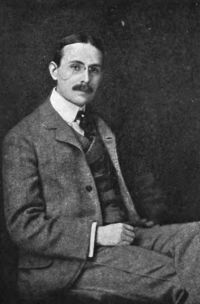
Portrait of Ralph Henry Barbour Ralph Henry Barbour For the Freedom of the Seas — Chapter 21 (1918)

The sea was as much like a mill-pond as it ever gets in that locality, where fathoms are few, and a bright late October sun made dancing ripples across the water as it climbed into the eastern sky. It was at about half-past seven when a lookout reported to the bridge that what seemed to be a small boat was in sight to the north. Signals were exchanged with the four-stack cruiser behind and presently the Gyandotte left her place and bore northward toward where a tiny dark speck lay on the blue ocean.
Source: Wikisource

Portrait of Ralph Henry Barbour Ralph Henry Barbour For the Freedom of the Seas — Chapter 21 (1918)

The gun captain had been wounded in the left arm, but a week would put him right.
The Gyandotte laid up at South Shields for three days, during which time the sound of pneumatic drills and hammers made life hideous. Then there was painting to be done over the new plates. Ashore the Gyandotte's crew swaggered a little, less from vanity than from a sense of pleasure in having contributed their bit, and no longer had to sit mum while "Limie" men told of desperate deeds in the North Sea.
Source: Wikisource

Portrait of Ralph Henry Barbour Ralph Henry Barbour For the Freedom of the Seas — Chapter 21 (1918)

That left just Nutley and me. We wanted to get rid of the others to lighten the boat, but we couldn't lift them. That morning when you sighted us I was saying my prayers, or trying to. I thought Nutley was dead, too. He didn't answer when I spoke to him. He says I didn't speak, but he's quite wrong. Well, you know the rest."
"It must have been awful," said Nelson. "Is the man you spoke of all right now? Nutley, I mean?"
"Right as a trivet. But it makes a chap a bit serious to think that out of fourteen of us only two are alive today. Well, as our friends the French say, it is the war."
Source: Wikisource

Get perspective with Kwize: daily news enlightened by great literature