Summary

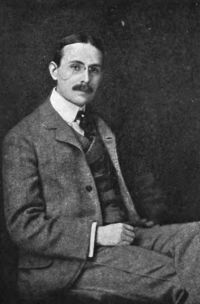
Portrait of Ralph Henry Barbour Ralph Henry Barbour For the Freedom of the Seas — Chapter 17 (1918)

Nelson wondered at the tier on tier of faces, blurred by distance, that looked down from the many decks of the big liners. He couldn't see the expression of any individual countenance, for the Gyandotte didn't get close enough for that, but it seemed to him that a sort of composite and kindly grin beamed over the water from every one of the troopships. Now and then, when the wind allowed, he could hear the cheering, steady, continuous, and always broad-brimmed campaign hats fluttered like brown leaves in a breeze.
"They're the boys! Good old kids from the U. S. A.!"
Source: Wikisource

Portrait of Ralph Henry Barbour Ralph Henry Barbour For the Freedom of the Seas — Chapter 17 (1918)

Those destroyers were new at the game and filled with enthusiasm, and half a dozen times that day the sharp bark of three-inch or four-in guns added to the joy of life. When it wasn't inanimate wreckage that made a lookout gasp and shout incoherently it was a porpoise. A porpoise appearing suddenly near the bow suggests just one thing in the world, and it isn't "Porpoise!" It's "Torpedo!" The Gyandotte was theoretically blown to bits at least five times that day by playful porpoises!
Source: Wikisource

Portrait of Ralph Henry Barbour Ralph Henry Barbour For the Freedom of the Seas — Chapter 17 (1918)

Now there were but four of the original convoys left, for two were already showing their propellers and hiking back to the west: "Straight for Broadway," as one yearning voice on the Gyandotte phrased it. Altogether the convoy now consisted of three cruisers—one an armored craft—and five destroyers. The "Big Lady" was saturnine looking and forbidding, like a great gray bulldog, and had four ridiculously high funnels and a basket mast forward and a military mast aft and was all broken out with search lights like a child with measles.
Source: Wikisource

Get perspective with Kwize: daily news enlightened by great literature