“ But stealing reputation seems a meaner thing to me. A letter in the Herald says some generals allow That there wa'n't no fight where Lookout rears aloft its shaggy brow; But this coat sleeve swinging empty here beside me, boy, to-day, Tells a mighty different story in a mighty different way. When sunbeams flashed o'er Mission Ridge that bright November morn, The misty cap on Lookout's crest gave token of a storm; For grim King Death had draped the mount in grayish, smoky shrouds— Its craggy peaks were lost to sight above the fleecy clouds. ”
Lookout
Definition and stakes
A lookout is an individual assigned to monitor potential dangers, a role that originated in maritime settings where they scanned the seas for threats. This duty has since expanded into criminal and railway contexts, demonstrating its versatility. Authors such as William Howard Taft highlighted its essential function in navigation, while James Gilmour detailed the alertness needed on board vessels.
Edwin Abbott Abbott, in Flatland, used the concept metaphorically to examine the boundaries of perception, and Stanley R. Matthews emphasized the communal dependence on lookouts for survival. These differing viewpoints illustrate the theme’s dual emphasis on practical safety and the wider human ability to observe and remain aware.
Quotes about “lookout”
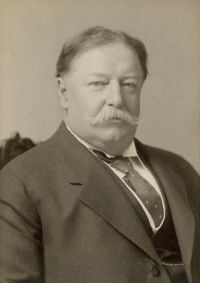 William Howard Taft,
British Columbia Mills Tug Barge Company v…
William Howard Taft,
British Columbia Mills Tug Barge Company v…
“ A lookout is for the purpose of seeing and advising those navigating the ship of what is in the way, and the danger on a night like the one here presented an exigency requiring the peculiar services of a lookout quite as much as in a crowded harbor. ”
James Gilmour, James Gilmour of Mongolia: His diaries…
“ The man on the look-out was a frequent victim. I was always sure to find a man there, generally alone, and never asleep. The man, also, was changed at regular intervals, so that I knew exactly when I would find a fresh man. When I talked to the look-out man, I used to keep a sharp lookout myself, lest by distracting his attention I should get him into trouble. Many a good hour have I stood at the prow as we passed through the warm Indian Ocean, till my clothes were wet with the dew of night ”
Stanley R. Matthews, Motor Matt's Close Call; or, The Snare of Don Carlos
“ The lives of the hunters depend upon the watchfulness of the attenuated line of lookouts, from the women on the headland to the first sentinel within signaling distance. But tragedies occur notwithstanding. ”
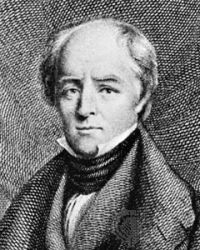 Basil Hall,
The lieutenant and commander
Basil Hall,
The lieutenant and commander
“ Presently another look-out, instructed by the first where to direct his eyes, also discovers the man; then another sees him, then another, and so on, till all who are aloft obtain sight of the desired object, and join in pointing with their hands to where it is to be found. ”
 Edwin Abbott Abbott,
Flatland
(1884)
Edwin Abbott Abbott,
Flatland
(1884)
“ I for my part noticed by the sense of sight, before I entered your Kingdom, that some of your people are Lines and others Points, and that some of the Lines are larger⸻" "You speak of an impossibility," interrupted the King; "you must have seen a vision; for to detect the difference between a Line and a Point by the sense of sight is, as every one knows, in the nature of things, impossible; but it can be detected by the sense of hearing, and by the same means my shape can be exactly ascertained. ”
 Morrison Heady,
The Farmer Boy, and How He Became Commander-In-Chief
Morrison Heady,
The Farmer Boy, and How He Became Commander-In-Chief
“ And as the eyes of the young surveyor slowly range the wide prospect from point to point, and take in miles and miles of beauty at a single stretch of view, there is a look in them as if he would recall some pleasing dream of the night, which he would now fain bring forth, though but a dream, to refine and elevate the thoughts wherewith his mind must needs be occupied throughout the day. ”
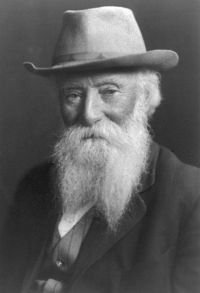 John Burroughs,
Locusts and Wild Honey
John Burroughs,
Locusts and Wild Honey
“ How many eyes did Gilbert White open? how many did Henry Thoreau? how many did Audubon? how many does the hunter, matching his sight against the keen and alert sense of a deer or a moose, or fox or a wolf? Not outward eyes, but inward. We open another eye whenever we see beyond the first general features or outlines of things,—whenever we grasp the special details and characteristic markings that this mask covers. Science confers new powers of vision. ”
Harry E. Mereness, Weird Tales (1923)
“ You feel that he sees you, but that you are simply one of the images in the general make-up of the last picture that is conveyed to his brain. There is no recognition in the glance—just a vague, hopeless and apparently vacant stare, but one which you feel discerns the sharp outlines of the persons and objects in the room, without recognizing features or details. ”
 Jean-Jacques Rousseau,
Émile; Or, Concerning Education…
Jean-Jacques Rousseau,
Émile; Or, Concerning Education…
“ We must for a long time compare sight with touch, if we would accustom our eye to report forms and distances accurately. Without touch and without progressive movement, the keenest eye-sight in the world could give us no idea of extent. To an oyster the entire universe must be only a single point. ”
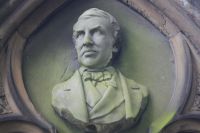 John Hill Burton,
Life and Correspondence of David Hume…
John Hill Burton,
Life and Correspondence of David Hume…
“ Though apparently surveying the world with a sick and careless eye, he occasionally penetrated into the depths of the human heart, and marked its secrets, with an accuracy that made the practised and systematic observer's survey seem but a superficial glance. ”
 D. H. Lawrence,
Fantasia of the Unconscious
D. H. Lawrence,
Fantasia of the Unconscious
“ But there are, of course, also the two ways of volitional vision. We can see with the endless modern critical sight, analytic, and at last deliberately ugly. Or we can see as the hawk sees the one concentrated spot where beats the life-heart of our prey.In the four modes of sight we have some choice. We have some choice to refuse tastes or smells or touch. In hearing we have the minimum of choice. ”
William James, The Principles of Psychology, Volume 2…
“ The sight of a man walking is a familiar spectacle to us. We perceive it as a connected whole, and at most notice the most striking of its peculiarities. Strong attention is required, and a special choice of the point of view, in order to feel the perpendicular and lateral oscillations of such a walking figure. We must choose fitting points or lines in the background with which to compare the positions of its head, but if a distant walking man be looked at through an astronomical telescope (which inverts the object) , what a singular hopping and rocking appearance he presents! ”
 Leonardo da Vinci,
A Treatise on Painting
(1802)
Leonardo da Vinci,
A Treatise on Painting
(1802)
“ We know that the point of sight is the eye of the spectator; and if you ask, how is a series of subjects, such as the life of a saint, to be represented, in different compartments on the same wall? I answer, that you are to place the principal event in the largest compartment, and make the point of sight as high as the eye of the spectator. ”
William James, The Principles of Psychology, Volume 1…
“ Who, besides, would believe without performing the appropriate experiments, that when one of his eyes is closed there is a great gap, the so-called 'blind spot,' not far from the middle of the field of the open eye, in which he sees nothing at all, but which he fills out with his imagination? ”
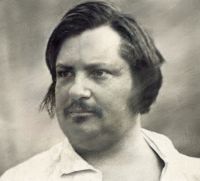 Honoré de Balzac,
Ursule Mirouet
(1842)
Honoré de Balzac,
Ursule Mirouet
(1842)
“ Sight and hearing are then exercised in a manner far more perfect than any we know of here, possibly without the help of the organs we now employ, which are the scabbard of the luminous blades called sight and hearing. To a person in that state, distance and material obstacles do not exist, or they can be traversed by a life within us for which our body is a mere receptacle, a necessary shelter, a casing. ”
Charles Neville Buck, The Tempering
“ Those months of unavailing search stood always out luridly in his memory, and because his search was a thing that could accommodate itself to no rule except to follow faint trails into all sorts of places, he grew to an astonishing familiarity with parts at least of the town whose boast it is that no man knows it. ”
 Henry David Thoreau,
A Week on the Concord and Merrimack Rivers
Henry David Thoreau,
A Week on the Concord and Merrimack Rivers
“ We notice that it required a separate intention of the eye, a more free and abstracted vision, to see the reflected trees and the sky, than to see the river bottom merely; and so are there manifold visions in the direction of every object, and even the most opaque reflect the heavens from their surface. Some men have their eyes naturally intended to the one and some to the other object. ”
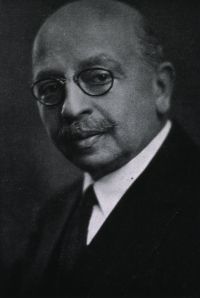 Joseph Jastrow,
Fact and Fable in Psychology
Joseph Jastrow,
Fact and Fable in Psychology
“ True seeing, observing, is a double process, partly objective or outward—the thing seen and the retina,—and partly subjective or inward—the picture mysteriously transferred to the mind's representative, the brain, and there received and affiliated with other images. Illustrations of such seeing with the "mind's eye" are not far to seek. Wherever the beauties and conformations of natural scenery invite the eye of man, does he discover familiar forms and faces; the forces of nature have rough-hewn the rocks, but the human eye detects and often creates the resemblances. ”
William James, The Principles of Psychology, Volume 1…
“ When an object, seen at first indirectly, draws our attention to itself, the corresponding movement of the eye follows without further ado, as a consequence of the attention's migration and of our effort to make the object distinct. The wandering of the attention entails that of the fixation point. Before its movement begins, its goal is already in consciousness and grasped by the attention, and the location of this spot in the total space seen is what determines the direction and amount of the movement of the eye. ”
 George Berkeley,
An Essay Towards a New Theory of Vision
George Berkeley,
An Essay Towards a New Theory of Vision
“ Thirdly, an OBJECT being placed at the distance above specified, and brought nearer to the eye, we may nevertheless prevent, at least for some time, the appearances growing more confused, by straining the eye. In which case that sensation supplies the place of confused VISION in aiding the mind to judge of the distance of the OBJECT; it being esteemed so much the nearer by how much the effort or straining of the eye in order to distinct VISION is greater. ”
Various, The Argosy, Vol. 51, No. 4, April…
“ The candle lighted, we again reconnoitred—nothing to be seen in dressing-room, bed-room, or the drawing-room beyond, the door of which was shut. But the curious sense of a presence near us—stronger than any feeling of the kind I had ever previously experienced—was gone. You have all felt the presence of another person unseen. ”

“ Being shut into dark, narrow paths prevents one from seeing anything outside—the daylight and all the other roads. But of course when a gap is made, one looks out through it. And looking out means looking up.' She paused a moment, and added softly, looking over the dark head out of the window: 'I think, you know, we're all trying to make what amends we can by looking up now, if we ever looked at all down. ”
 Leslie Stephen,
Dictionary of National Biography…
(1885)
Leslie Stephen,
Dictionary of National Biography…
(1885)
“ Assuming as proved or evident that the sight cannot inform us of distance in a direct line outwards, inasmuch as all the points in such a line are projected upon a single point in the retina, he argues that all sight involves foresight ; that an apparently simple perception involved an infererence founded upon association, and that the visual sensations are merely signs of of corresponding tactual sensations. ”
 Walter Scott,
The Lady of the Lake
(1810)
Walter Scott,
The Lady of the Lake
(1810)
“ At the sight of a vision, the eye-lids of the person are erected, and the eyes continue staring until the object vanish. This is obvious to others who are by, when the persons happen to see a vision, and occurred more than once to my own observation, and to others that were with me. ”
 Alexander Maclaren,
Expositions of Holy Scripture: Romans Corinthians…
Alexander Maclaren,
Expositions of Holy Scripture: Romans Corinthians…
“ If you look for a minute, not much caring whether you see anything or not, and then turn away, and get your eye dazzled with all those vulgar, crude, high colours round about you here on earth, it is very little that you will see of ‘the things that are not seen.’ Concentrated attention, and a steadfast look, are wanted to make the invisible visible. ”
 Alfred North Whitehead,
Nature and Life
(1934)
Alfred North Whitehead,
Nature and Life
(1934)
“ Also, human beings shut off sight with peculiar case, by closing their eyes or by the calamity of blindness. The information provided by mere sight is peculiarly barren — namely, external regions disclosed as coloured. ”
 Hallie Erminie Rives,
A Fool in Spots
Hallie Erminie Rives,
A Fool in Spots
“ One by one, she often watched the neighboring lights go out, and human sounds grow still. When the phantom-peopled dark closed around her companionless hours, then would come the frightful waiting—in the watches of the night. ”
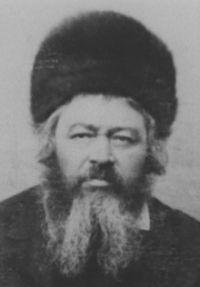 Yechiel Michel Epstein,
Translation:Arukh ha-Shulchan…
Yechiel Michel Epstein,
Translation:Arukh ha-Shulchan…
“ There is one who understands their intent to be that the preferred practice is to search at night (Magen Avraham, comment 3) . This explanation does not suffice, since we already have seen established that searching by sunlight is for those who did not search at night [and why then the repetition?] ”
 Caroline Lee Hentz,
Ernest Linwood; or, The Inner Life of the Author
Caroline Lee Hentz,
Ernest Linwood; or, The Inner Life of the Author
“ I turned, and met the glance that needed no explanation. This earnest scrutiny of a stranger excited his displeasure; and I did not wonder, when I thought of the strange fascination I had experienced. I blushed, and drew my veil over my face,—resolving henceforth to set a guard over my eyes as well as my lips. It was the first dark-flashing glance I had met since I had left Grandison Place. ”
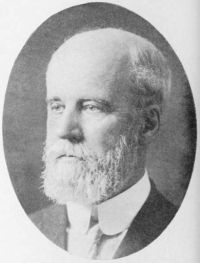 James Champlin Fernald,
English Synonyms and Antonyms
James Champlin Fernald,
English Synonyms and Antonyms
“ To glance is to look casually or momentarily. To stare is to look with a fixed intensity such as is the effect of surprise, alarm, or rudeness. To scan is to look at minutely, to note every visible feature. To inspect is to go below the surface, uncover, study item by item. View and survey are comprehensive, survey expressing the greater exactness of measurement or estimate. Watch brings in the element of time and often of wariness; we watch for a movement or change, a signal, the approach of an enemy, etc. ”
Joseph Jastrow,
Fact and Fable in Psychology
“ The eye, too, forms the centre of emotional expression, and reveals to our fellow-men the subtile variations in mood and passion, as it is to the physician a delicate index of our well-being. There are reasons for believing that it was the function of sight as a distance-sense that led to its supremacy in the lives of our primitive ancestors. ”
Hans Gross, Criminal Psychology: A Manual for Judges…
“ Hence too, no sense can offer us such surprises as the sense of sight. If I imagine the thunder of Niagara, the voice of Lucca, the explosion of a thousand cartridges, etc., or anything else that I have not heard, my imagination is certainly incorrect, but it will differ from reality only in degree. It is quite different with visual imagination. ”
William James, The Principles of Psychology, Volume 2…
“ The sight, as it is called, of figure, or distance, appearing as it does a simple sensation, is in reality a complex state of consciousness—a sequence in which the antecedent, a sensation of color, and the consequent, a number of ideas, are so closely combined by association that they appear not one idea, but one sensation. ”
 James Frederick Ferrier,
Blackwood's Magazine
(1842)
James Frederick Ferrier,
Blackwood's Magazine
(1842)
“ In the words of Mr Bailey, "Whether objects are seen to be external, or at some distance, is one question altogether distinct from the inquiry—whether objects are seen by the unassisted vision to be at different distances from the percipient." ”
Marian Storm, Minstrel Weather
“ These little nooks where we confronted so many puzzles, wondered over incomprehension, and looked into the hard eyes of derision, abide caressingly for memory, who flies to them still from cities of dreadful light. The need for those [79] small havens is lifelong. They are rarely at hand in later days, but no locked door and no walled chamber of the mind can take their place. ”
Ward McLean, Popular Science Monthly (1877)
“ A prolonged and steady looking at an object or at objects near the eye, though at proper distance, without rest or frequent change of the visual focus, as in long and absorbed novel-reading, intense study, or persistent diligence in needlework. 4. The practice of reading or otherwise using the sight at too short range. This results in part from insufficient light; or from its faulty direction, so that the hand or body throws a shadow on the page; or so that the direct rays fall upon the eye, causing undue contraction of the pupil, while the page is in shadow. ”
 John Hamilton Moore,
The Young Gentleman and Lady's Monitor…
John Hamilton Moore,
The Young Gentleman and Lady's Monitor…
“ Your attention, if possible, should be so ready as to observe every person in the room at once, their motions, their looks, and their turns of expression, and that without staring or seeming to be an observer. ”
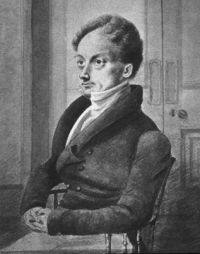 James Mill,
Analysis of the Phenomena of the Human Mind
James Mill,
Analysis of the Phenomena of the Human Mind
“ In SIGHT, the organ is very conspicuous, and has an appropriate name, the Eye.In ordinary language, the object of sight is the body which is said to be seen. This is a similar error to those which we have detected in the vulgar language relating to the senses of smell and hearing. It is Light alone which enters the eye; and Light, with its numerous modifications, is the sole object on sight. ”
 Richard A. Proctor,
Half-hours with the Telescope
(1873)
Richard A. Proctor,
Half-hours with the Telescope
(1873)
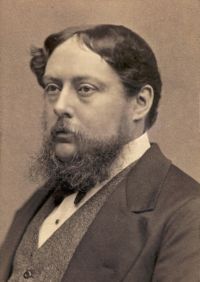
“ The observer should not leave to the precious hours of the night the study of the bearing and position of the objects he proposes to examine. This should be done by day—an arrangement which has a twofold advantage,—the time available for observation is lengthened, and the eyes are spared sudden changes from darkness to light, and vice versâ. Besides, the eye is ill-fitted to examine difficult objects, after searching by candle-light amongst the minute details recorded in maps or globes. ”
