“ Peter slipped out of the garden into the white road than ran down between the grey mystery of the olive groves to the little dirty fishing-town and the dark, quiet sea. In the eastern sky there was a faint shimmer, a disturbance of the deep, star-lit blue, a pallor that heralded the rising of the moon. But as yet the world lay in its mysterious dusk.Peter, his feet stirring on the white dust of the road, drew in the breath of the lemon-grown, pine-grown, myrtle-sweet hills, and the keen saltness of the sea, and the fishiness of the little, lit, clamorous town on its edge. ”
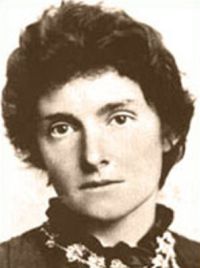
Rose Macaulay
Biographical details

Rose Macaulay (1881–1958), an English novelist and writer, is celebrated for her intricate exploration of spiritual conflict, human vulnerability, and the interplay between belief and longing. Best known for The Towers of Trebizond, her award-winning spiritual autobiography, she interlaced personal theological dilemmas with wistful humor, examining the tensions between mystical Christianity and earthly love.
Influenced by Virginia Woolf and Anatole France, her fiction—spanning novels like Dangerous Ages and The Lee Shore—often grappled with existential themes, while her non-fiction explored religious history and cultural critique. A prolific author of biographies, travelogues, and poetry, Macaulay’s work remains a testament to her nuanced engagement with belief, identity, and the human condition, culminating in a legacy that bridges literary artistry and profound philosophical inquiry.
Quotes by Rose Macaulay
“ How should it be lonely? It held, as always, a companionship of two. As always, one had only to look up to see the other. So had all the past been; so would all the future be. No other state was within the bounds of imagination. As Betty once, at Baja by the sea, had looked up swiftly and seen, for life and all it meant, all it contained, herself and Tommy on warm sand, and a sand-castle dotted with pumice-stone like a plum-pudding, and had then been lit by a flash of vivid insight, of great certainty; so now she came, by slower steps, through the black night to the same realization. ”
“ The tedium of life, with no more to do in it—why couldn't it end? The lights were out, the flowers were dead—and yet the unhappy actors had to stay and stay and stay, idling on the empty, darkened stage. (That was how Mrs. Hilary, with her gift for picturesque language, put it.) Must it be empty, must it be dark, Neville uselessly asked, knowing quite well that for one of her mother's temperament it must. Mrs. Hilary had lived in and by her emotions; nothing else had counted. Life for her had burnt itself out, and its remnant was like the fag end of a cigarette, stale and old. ”