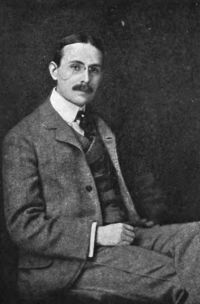
Ralph Henry Barbour

Ralph Henry Barbour

Summary

Portrait of Ralph Henry Barbour Ralph Henry Barbour The play that won (1916)

The wait was hard on the nerves of the players, and Billy Whipple, who was to play right field in place of Ted, was plainly unsettled. Ted knew of no reason why he should not enjoy the painful pleasure of watching the game, and so, when Loring, the Temple Academy pitcher, wound himself up for the first delivery, Ted was seated cross-legged under the rope behind third base with a very disconsolate expression on his perspiring countenance. To-day the consciousness of virtue failed more than ever to atone for his being out of the game.
Source: Gutenberg

Portrait of Ralph Henry Barbour Ralph Henry Barbour The play that won (1916)

Pillon, too, was giving up. There was nothing to it now but Lacon, and maybe the Meet would go to the Cardinal-and-White! Terry’s distorted face writhed with a scowl. If only he had somehow kept himself fresher! If only he could cut down that distance! They were in the homestretch now and the finish was in sight. There wasn’t time, even if he had the strength and lungs.
Pillon was no longer in sight to Terry now: only Shores, wobbling on his long, spindly legs, Walt, losing at every stride, and Mullins, ready to drop but still fighting. Still fighting! Why, two could play at that game!
Source: Gutenberg

Portrait of Ralph Henry Barbour Ralph Henry Barbour The play that won (1916)

Nothing marred the beatific success of the jaunt up to the time that the fog arrived. It was Joe who drew the attention of the others to the fact that the wide-flung landscape below them was no longer visible. As a fog on Bald Mountain is a damp and chilly affair, and as it is no particular aid to finding one’s way down a road that twists like a grapevine, they decided to make an early start.
Source: Gutenberg

Get perspective with Kwize: daily news enlightened by great literature