Summary

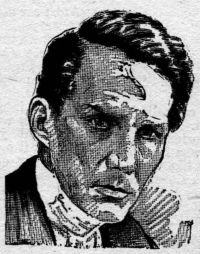
Portrait of Ray Cummings Ray Cummings The Big Idea — IV. Mr. Hope's Idea (1920)

CHAPTER IV. MR. HOPE’S IDEA. MR. LEFFINGWELL HOPE concluded his interview with Jimmy in a state of mental excitement of which his calm, imperturbable demeanor gave no sign. His keen mind had seen at once the possibilities in Jimmy’s crude idea.
Mr. Hope was not a technical man. But he understood, infinitely more clearly than Jimmy possibly could, what this plan would accomplish for the Wentworth Company, assuming it would work out. Mr. Hope had imagination. He saw the technical difficulties standing in the way—some of them he had pointed out to Jimmy.
Source: Wikisource

Portrait of Ray Cummings Ray Cummings The Big Idea — IV. Mr. Hope's Idea (1920)

The chemist considered. “What it saves is only part of the cost of coal,” he said finally. “It ain’t that every factory what you tell it to right away breaks its neck to move to where the coal is.”
“But it’s particularly good for the Wentworth Company, you mean?”
“For them when they use so much fuel, and because, don’t you know about the new plant what they expect to put up next year? For them it would be a good thing.”
Mr. Merkle referred to the fact that the Wentworth Company was considering the building of another factory for the making of optical glass.
Source: Wikisource

Portrait of Ray Cummings Ray Cummings The Big Idea — IV. Mr. Hope's Idea (1920)

Merkle would be the man. He would see Merkle. Shifty little man, but he could handle him.
Mr. Leffingwell Hope felt very pleased with himself when his meditations reached this point. He tossed his empty cigarette box into the waste-basket and went in to see Mr. Wentworth.
“About that boy who was in here just now,” he began casually, finding the president disengaged at the moment. “I thought you might be amused. A crazy, wild idea. It seems his mother or somebody owns some land up in Alberta. Somebody else struck natural gas ten or twenty miles away.
Source: Wikisource

Get perspective with Kwize: daily news enlightened by great literature