Summary

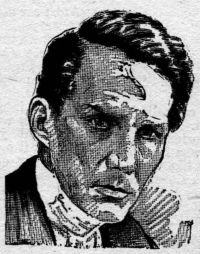
Portrait of Ray Cummings Ray Cummings The Big Idea — VII. Jimmy Plays Trumps (1920)

In modern furnaces, for the fusion of glass or other operations where great heat is necessary, the process of combustion of the fuel is carried on, not in one operation, as it is in the simple furnaces with which every one is familiar, but in two distinct, separate, progressive stages.
The first stage takes place in a subsidiary furnace known as a “gas producer.” Here part of the heat which the fuel is capable of generating is utilized for the production of a combustible gas. In other words the fuel is changed into gaseous form, but only partly burned.
Source: Wikisource

Portrait of Ray Cummings Ray Cummings The Big Idea — VII. Jimmy Plays Trumps (1920)

This the president discussed at some length. “Why not put the shafts closer together?” he finally asked.
“No reason that we can see,” said Jimmy. “If they were closer it would make the connection down below easier. This second shaft is the one that brings up the gaseous products of combustion.
“We’re going to use your regular regenerative furnace, or one something like it. We can get you producer gas that is just as good as any you’re getting—from the coal we burn in the ground, if we control the air and steam right.”
Source: Wikisource

Portrait of Ray Cummings Ray Cummings The Big Idea — VII. Jimmy Plays Trumps (1920)

This was the process Jimmy proposed to carry on in the ground; that is, only partly to consume the coal by supplying it with an insufficient amount of oxygen. And it was the unburned coal-gases—the combustible smoke, in other words—that he proposed to pipe up to the furnace at the surface—not the actual heat. The burning mine, hundreds of feet down in the ground, was in effect to be his subsidiary furnace—his gas-producer.
Source: Wikisource

Get perspective with Kwize: daily news enlightened by great literature