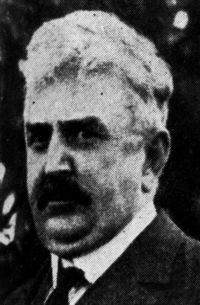
Raymond S. Spears

Raymond S. Spears

Summary

Portrait of Raymond S. Spears Raymond S. Spears,  The Golden Pears — Chapter 2 (1912)

“ Francis into old Mississip', and there would be slight chance of old Clinchell chasing him farther. That meant abandoning the beautiful forest river, fleeing from the wonderful Dark Bend swamps, and leaving Sue Belle Clinchell for some other young man to get. If he went, she would properly despise him; if he remained, he must fight—fight bushwhacking enemies and bought assailants.
Lunmer Andrest could have cried for vexation—could have shed tears, the evidence of the poetry in his soul. Practical people do not weep, but those who love things of beauty know the welling of tears into their eyes.
”
Source: Wikisource

Portrait of Raymond S. Spears Raymond S. Spears,  The Golden Pears — Chapter 2 (1912)

“ When one courts the daughter of a thousand-acre cotton-picker, the thought of money bids him pause. The problem of escape and pursuit, the strangeness of the lower river—none of these things worried Andrest. He guessed that Sue Belle would go when they were ready; but he had only a little money, hardly enough to keep the girl in the kind of clothes she wore. One suit, she had mentioned casually, cost forty-eight dollars in Memphis. That wasn't any too good for her, but Andrest's best suit cost eleven dollars and a half, and his work suit had cost two dollars and sixty cents by mail. ”
Source: Wikisource

Portrait of Raymond S. Spears Raymond S. Spears,  The Golden Pears — Chapter 2 (1912)

“ The rest of his money was buried in demijohns back in the swamp by a certain tree. The shanty-boater did not know how to put his savings out at interest, and he never had dared to ask questions that might awaken the suspicions of the bad men who lurked in the Dark Bend swamps.
Some of them, their neighbors said, would kill a man for fifty dollars—with pleasure, and without conscience. They had killed men for less than that. Andrest's face grew grave as he faced the probability that old Clinchell would consider this means of "losing" his enemy.
”
Source: Wikisource

Get perspective with Kwize: daily news enlightened by great literature