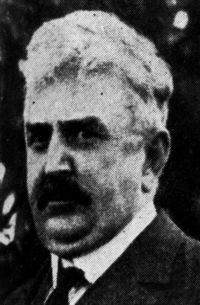
Raymond S. Spears

Raymond S. Spears

Summary

Portrait of Raymond S. Spears Raymond S. Spears The Story of the Fakirs (1900)

He sells a dozen gross of little iron dogs today, and tomorrow takes out a supply of rubber faces and balloon squeaks; seldom more than one kind of notion, almost never more than two, at a time. The boss fakir—the feeler of public opinion—sends out twenty five men today and one hundred and fifty tomorrow for no apparent reason. If it is a Dewey parade, or the day before Christmas, he sends out five hundred or a thousand, because there is reason in that. He supplies his men with toys—sometimes every one gets the same kind—and tells them what catch phrases shall be uttered that day.
Source: Wikisource

Portrait of Raymond S. Spears Raymond S. Spears The Story of the Fakirs (1900)

He even shows the street men how to gesticulate, and how to make faces—a startling face sometimes goes a long distance in getting trade for a street man. He invents traits of character, curiosities of dress—not too pronounced; he is the best imitation of a lame man of them all.
A good puzzle which takes plenty of action to solve is the fakir's pet, for the fakir is an actor, as has been seen, and puzzles of that kind sell well.
Source: Wikisource

Portrait of Raymond S. Spears Raymond S. Spears The Story of the Fakirs (1900)

Queer creatures with wabbling heads, toys with clockwork interiors, and Santa Clauses in all shapes and sizes are among the most attractive things. There are fads at that time, but they do not come to any such proportions as those of summer, which is proverbially the silly season. So the fakir has to come as near as he can to the trade which goes on in the stores. He would rather have the summer trade; dealing with sad eyed women, counting pennies, has its effect on him as it would have on any one else.
Source: Wikisource

Get perspective with Kwize: daily news enlightened by great literature